
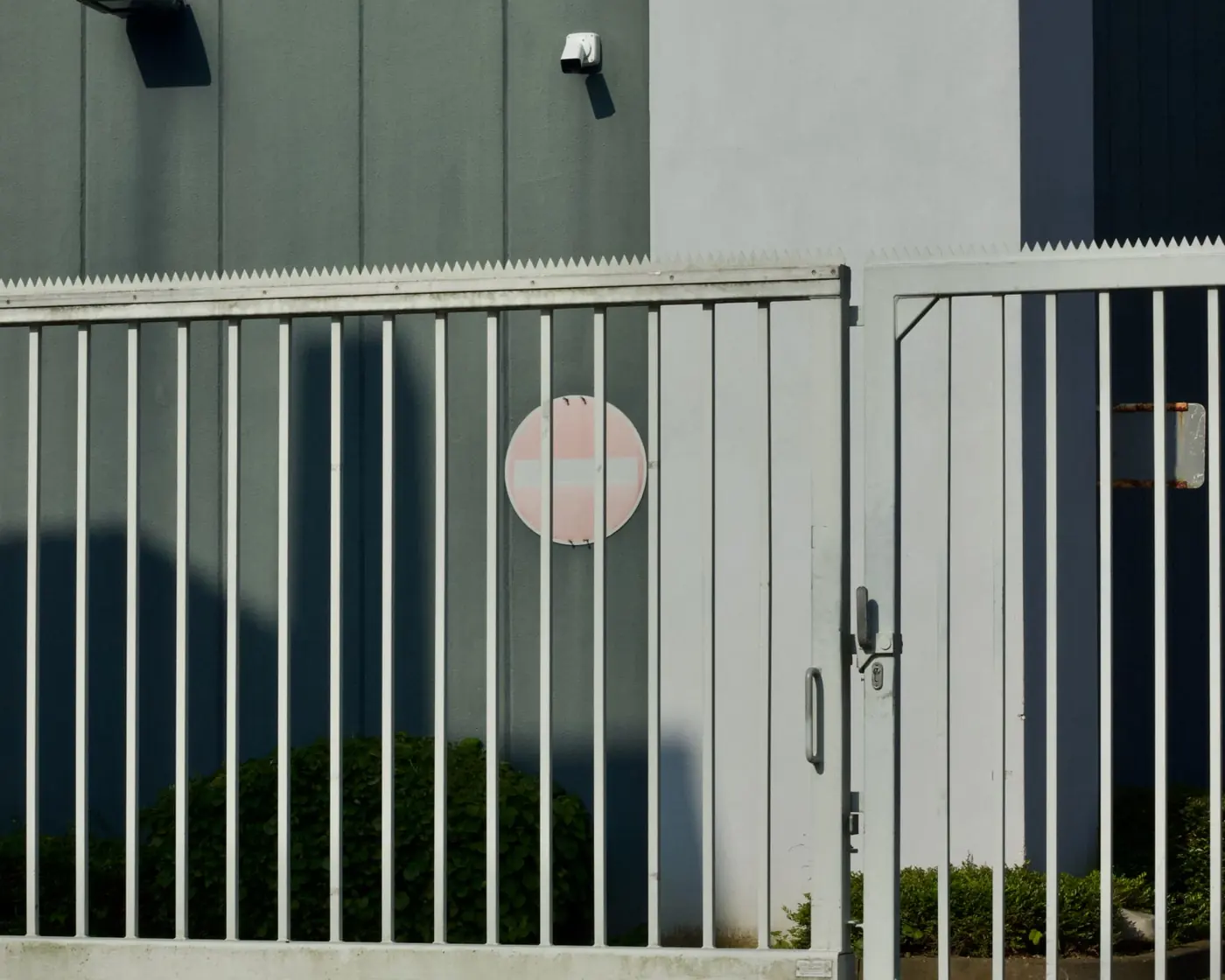
Perimeter security guide
Types of security fencing for commercial premises
Security fencing defines a boundary and supports controlled entry, but the right system depends on visibility, ground conditions, risk and how the site operates.
- Free site inspection and quotation
- Engineer led, no salespeople
- No callout charges for 3 months after installation
Before you buy
Think of the perimeter as a complete system
A fence marks the edge of a site and creates a physical obstacle, but its effectiveness depends on more than panel height. Posts, fixings, gates, ground levels, nearby objects and the way the boundary is observed all influence the result.
Commercial fencing should also support daily activity. Staff, visitors, deliveries and emergency access need clear routes, while vehicle gates and barriers must meet the boundary without leaving weak gaps. A fence that is repeatedly removed or left open for convenience is not providing the intended control.
Start with a walk around the full perimeter. Record slopes, soft ground, drainage, buildings meeting the fence, existing vegetation and areas where intruders could be concealed. Then compare fencing types against those conditions and the security objective.
Agree what the fence must achieve before choosing a material. Some sites mainly need clear demarcation and controlled routes, while others need greater delay around a yard or compound. Writing that objective down helps compare products, heights and gate details on a like-for-like basis and prevents decisions being driven by appearance alone.
Also note who needs to use each section of the boundary, including deliveries, maintenance contractors and emergency services.
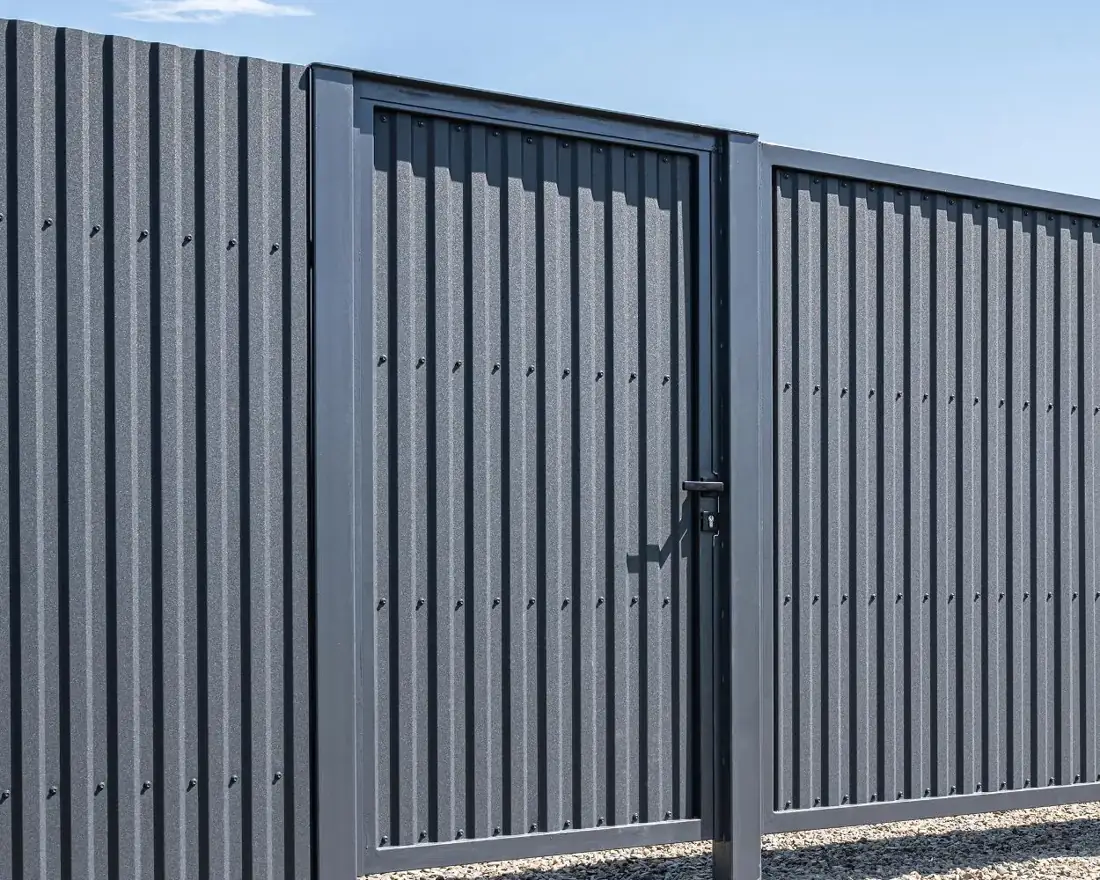
Rigid mesh panel fencing
Rigid mesh fencing uses welded wire panels fixed to posts. Different mesh patterns and panel constructions provide different levels of rigidity and resistance. Its open structure preserves visibility, which can help natural surveillance and CCTV compared with a solid screen.
Mesh can suit boundaries, car parks, internal compounds and areas where seeing activity on the other side is useful. Check the complete panel, post and fixing specification rather than assuming all products described as security mesh perform equally.
Climb resistance depends on the detailed design and installation, including height, mesh apertures and any topping. Nearby stacked items, structures or branches can provide climbing aids and should be considered during the survey.
Visibility
An open boundary can support observation and camera coverage, but it also means stored items remain visible from outside.
System specification
Panels, posts, fixings and installation need to work together, with ground conditions and expected exposure taken into account.
Steel palisade fencing
Palisade uses vertical steel pales connected to horizontal rails and supported by posts. It is a familiar sight around industrial yards and compounds and can provide a robust physical boundary where its appearance and level of visibility suit the site.
Pales, rails, posts, fasteners and finishes vary. The selected construction should reflect the security requirement and environmental exposure. Damaged or missing fixings and corrosion at vulnerable points need attention during routine inspection.
As with mesh, the fence is only part of the boundary. Changes in level can leave gaps underneath, while adjacent buildings and stored materials may create climbing opportunities. Gates should match the intended perimeter performance rather than forming a weaker section.
Pedestrian gates, vehicle entrances and compounds
A pedestrian gate should suit the frequency of use, escape requirements and access control arrangement. Electronic locks, closers and readers need a stable gate and frame. Provide a clear route that does not encourage people to walk through a powered vehicle entrance.
Vehicle gates need enough space and support for their type and operation. Rising barriers can control authorised vehicles but do not close the perimeter to pedestrians. Some sites use a barrier for working-hour traffic and a gate for out-of-hours closure.
Internal fencing can create separate compounds for plant, waste, gas cages or high-value items. Treat these as additional control zones with their own access requirements. Gates and fencing should not obstruct fire exits, maintenance clearances or safe vehicle routes.
- Walk the entire boundary and record slopes, obstructions and weak points.
- Match gates and pedestrian entrances to the surrounding perimeter.
- Plan CCTV and lighting around the fence line from the outset.
- Keep clearances needed for escape, maintenance and site operations.
Installation and long-term inspection
Ground conditions and underground services influence foundations and post installation. Ducts for gate, intercom, camera or lighting cables should be planned before surfacing where possible. Making good and drainage belong in the scope rather than being treated as finishing extras.
Inspect fences for loose panels, impact damage, corrosion, gaps caused by ground movement and vegetation that provides concealment or climbing help. Check gates and access control separately as moving equipment.
No fence guarantees that intrusion cannot occur. Its value comes from appropriate delay, clear demarcation and integration with detection, observation and response. Review the whole perimeter after any operational or layout change.
FAQs
Types of security fencing: frequently asked questions
Is mesh or palisade fencing more secure?
It depends on the complete specification, installation and site risks. Both are used commercially, and visibility, gates and surrounding conditions matter.
Does security fencing need planning permission?
Requirements depend on factors such as height, location and the property. Check with the relevant local planning authority before work where necessary.
Can a fence be fitted with access control and CCTV?
Yes. Pedestrian gates can use electronic locking and readers, while cameras and lighting can be planned to observe the boundary and entrances.
Further reading
Related commercial security guides
Sliding vs swing automatic gates
Compare movement space, gradients, traffic, groundworks and safety for commercial sliding and swing gate installations.
Read the guideSecurity lighting for businesses
Plan external lighting for safer movement and clearer CCTV while avoiding glare, dark shadows, nuisance and wasted energy.
Read the guideWarehouse CCTV placement
Plan warehouse camera views around doors, docks, aisles, yards and processes while accounting for racking, vehicles and lighting.
Read the guide
Sources
External references used for this guide
Planning a stronger site boundary?
Arrange a perimeter inspection covering fencing, entrances, ground conditions and integration with your existing security.
Free site inspection
Request a security fencing survey
Tell us the approximate boundary length, preferred material if any and where gates, compounds or camera coverage are needed.
Or email info@msmesecurity.co.uk
- Monday to Friday: 9am to 6pm
- Saturday and Sunday: 11am to 5pm