
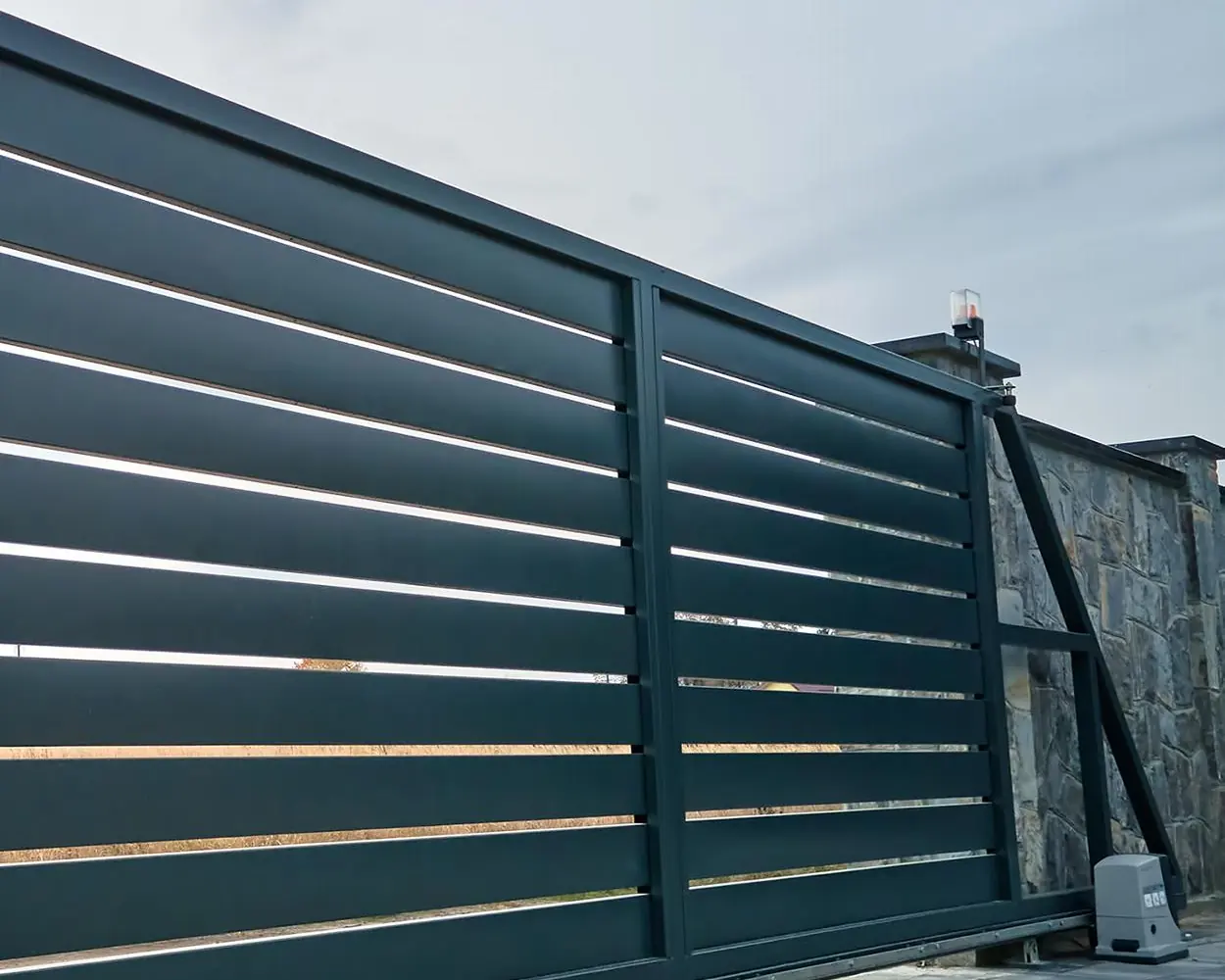
Automatic gate comparison
Sliding vs swing automatic gates: which suits your entrance?
The entrance geometry usually narrows the choice before the motor is considered. Map every part of the gate's movement and every person or vehicle nearby.
- Free site inspection and quotation
- Engineer led, no salespeople
- No callout charges for 3 months after installation
Before you buy
Start with space, levels and traffic
A sliding gate moves sideways along the boundary, while a swing gate rotates through an arc from its hinges. Both can secure a commercial vehicle entrance and work with access control, but they need different clearances and structural support.
Measure the clear opening and the space beside and behind it. Include slopes, drainage, parked vehicles, pedestrian routes and the turning paths of the largest vehicles. A gate that fits on a simple drawing may conflict with the way an HGV approaches in practice.
Automation also changes the risks at the entrance. Powered gates are machines and need a site-specific assessment of crushing, trapping, impact and other hazards. The gate structure, drive equipment, safety devices and maintenance must be designed as one system.
Photograph the entrance from both sides and note the busiest times of day. Include any parked vehicles, kerbs, drains or public paths near the opening. This information helps an engineer understand the real constraints before recommending a gate movement.
Note any equipment, signs or landscaping that would be difficult to move.
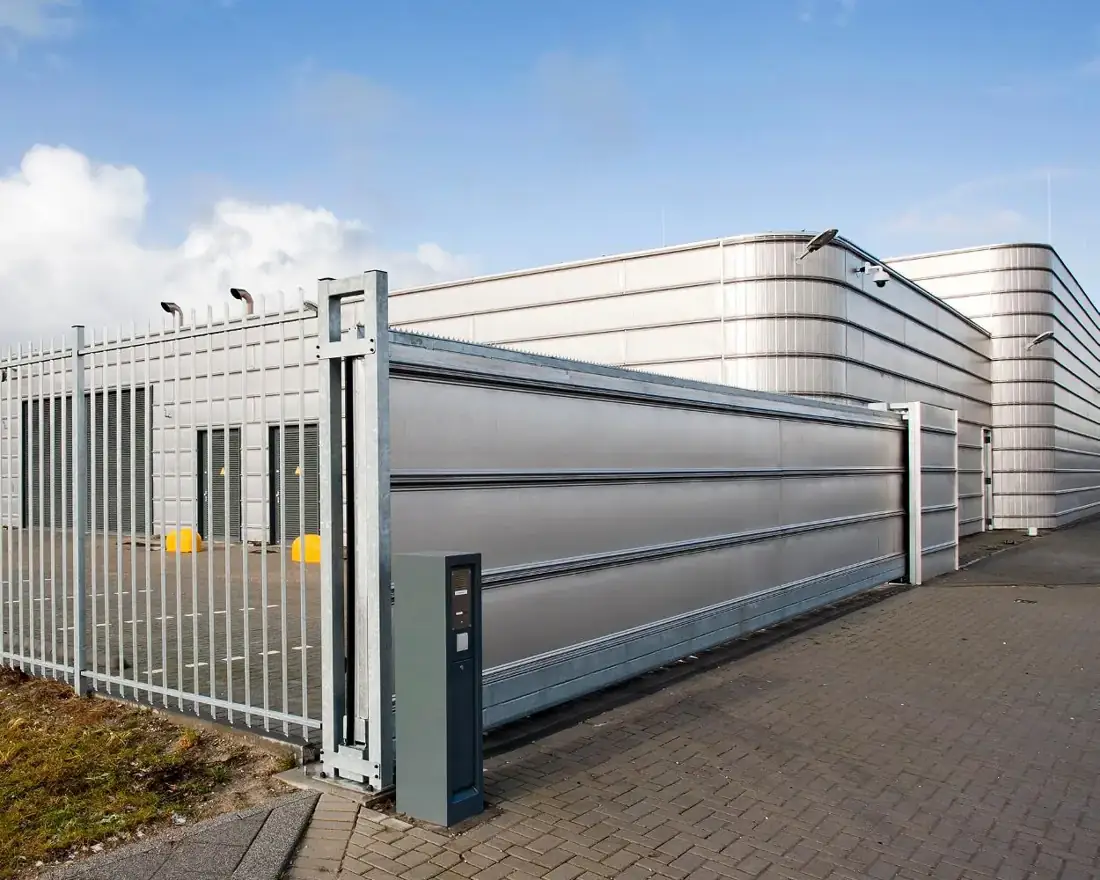
When a sliding gate can fit
A sliding gate needs sufficient unobstructed run-back space alongside the opening. It can suit wide vehicle entrances and places where a swing arc would obstruct traffic or a sloping driveway. The gate must remain supported and restrained throughout its travel.
A tracked sliding gate runs on a track across the entrance, so the foundation, levels, drainage and keeping the track clear are important. A cantilever design avoids a track in the roadway but generally needs additional space and structure beyond the clear opening.
The run-back area may create trapping points between the moving leaf and fixed objects. Guarding, fencing and safe distances should be addressed in the design. Do not allow storage or parking to encroach on the gate's travel after installation.
Tracked sliding
Needs a sound, level foundation and a track that can be kept clear of debris, ice and damage.
Cantilever sliding
Avoids a track across the drive but requires suitable run-back and a structure designed for the unsupported span.
When a swing gate can fit
Swing gates can suit smaller commercial entrances where there is a clear, level arc for the leaf or pair of leaves. Posts or pillars must support both the gate weight and automation forces. Existing decorative gates are not automatically suitable for motorisation.
The swing arc must not cross a public footway or create an unacceptable conflict with vehicles and pedestrians. Upward or downward gradients can obstruct movement and affect the automation. A separate pedestrian gate can reduce the need for people to use the vehicle opening.
Hinges, stops and the gate frame experience repeated loads. Solid infill can increase wind effects compared with an open design. These factors influence the motor and safety design, so a quotation should consider the actual leaf rather than opening width alone.
Traffic, controls and emergency use
Consider how many vehicles arrive at peak times and how long each entry takes. Gate speed alone does not determine throughput; driver identification, intercom calls and the time needed for a safe closing sequence also matter. Separate entry and exit routes may be appropriate on busy sites.
Cards, fobs, keypads, intercoms and ANPR can be used with either gate type. Regular drivers and visitors may need different methods. Vehicle detection and safety devices must suit the traffic sequence rather than being selected as generic accessories.
Agree manual release and fault procedures, including how the entrance remains secure and how people can leave safely. Emergency access requirements should be identified during design. Staff need instructions and training for foreseeable power or equipment failures.
- Measure the full swing arc or sliding run-back, not just the opening.
- Check ground levels, foundations, drainage and underground services.
- Plan staff, visitor, HGV and emergency access separately.
- Include trapping-point assessment, safety testing and maintenance in the scope.
Compare the complete entrance project
A swing gate may appear simpler until new posts or traffic changes are needed, while a sliding gate may require substantial track or run-back work. Compare fabrication, foundations, ducts, power, controls, safety equipment and making good as one itemised proposal.
The gate should meet the adjacent fence without creating an obvious weak point and support the site's operational routine. Ask for documentation, user training and a recommended inspection schedule at handover. Any unusual movement, impact or changed condition should be assessed before continued powered use.
FAQs
Sliding vs swing automatic gates: frequently asked questions
Which automatic gate needs less space?
It depends on the layout. Sliding needs run-back beside the opening; swing needs a clear arc. Measure both against actual vehicle and pedestrian routes.
Are sliding gates better on sloping driveways?
They can avoid some swing-arc problems, but gradient still affects track, foundations, levels and safety. A site survey is essential.
Can an existing manual gate be automated?
Possibly, if its structure, supports, hinges or running gear and the entrance risks are suitable. An engineer must assess the complete assembly.
Further reading
Related commercial security guides
Automatic gate cost
Budget for the gate, automation, groundworks, safety equipment and controls as one complete entrance project.
Read the guideAutomatic gate maintenance
A checklist for gate structure, tracks, hinges, motors, safety devices, controls, manual release and maintenance records.
Read the guideTypes of security fencing
Compare mesh, palisade, pedestrian gates and internal compounds by visibility, boundary layout, integration and day-to-day use.
Read the guide
Sources
External references used for this guide
Which gate movement fits your entrance?
An engineer can measure the opening, run-back or swing area and assess traffic, ground and safety before recommending a gate.
Free site inspection
Arrange an automatic gate site inspection
Tell us the approximate opening width, available space, vehicle types and whether a manual gate is already installed.
Or email info@msmesecurity.co.uk
- Monday to Friday: 9am to 6pm
- Saturday and Sunday: 11am to 5pm