

Commercial entrance planning
Rising bollards vs barriers: choosing vehicle access control
A barrier arm manages a vehicle lane differently from a rising bollard. Choose around the threat, traffic pattern and physical entrance rather than treating both as interchangeable security.
- Free site inspection and quotation
- Engineer led, no salespeople
- No callout charges for 3 months after installation
Before you buy
Define what the entrance must prevent
A vehicle barrier usually raises an arm to control entry through a lane. A rising bollard retracts into the ground to allow passage and rises to obstruct the route. Both can work with access control, but their physical effects and installation requirements differ substantially.
For many businesses, the main objective is orderly parking or keeping unauthorised deliveries out of a service area. Other sites need a specifically assessed response to deliberate vehicle intrusion. These are different requirements. Do not infer tested impact resistance from the size, material or appearance of either product.
Write down the vehicles you want to admit, the behaviour you need to discourage and the consequences of a failed entry decision. Include pedestrian movements and what happens when the premises is unattended. A clear operational requirement prevents the discussion becoming a comparison of equipment without a defined purpose.
Distinguish traffic management from impact protection
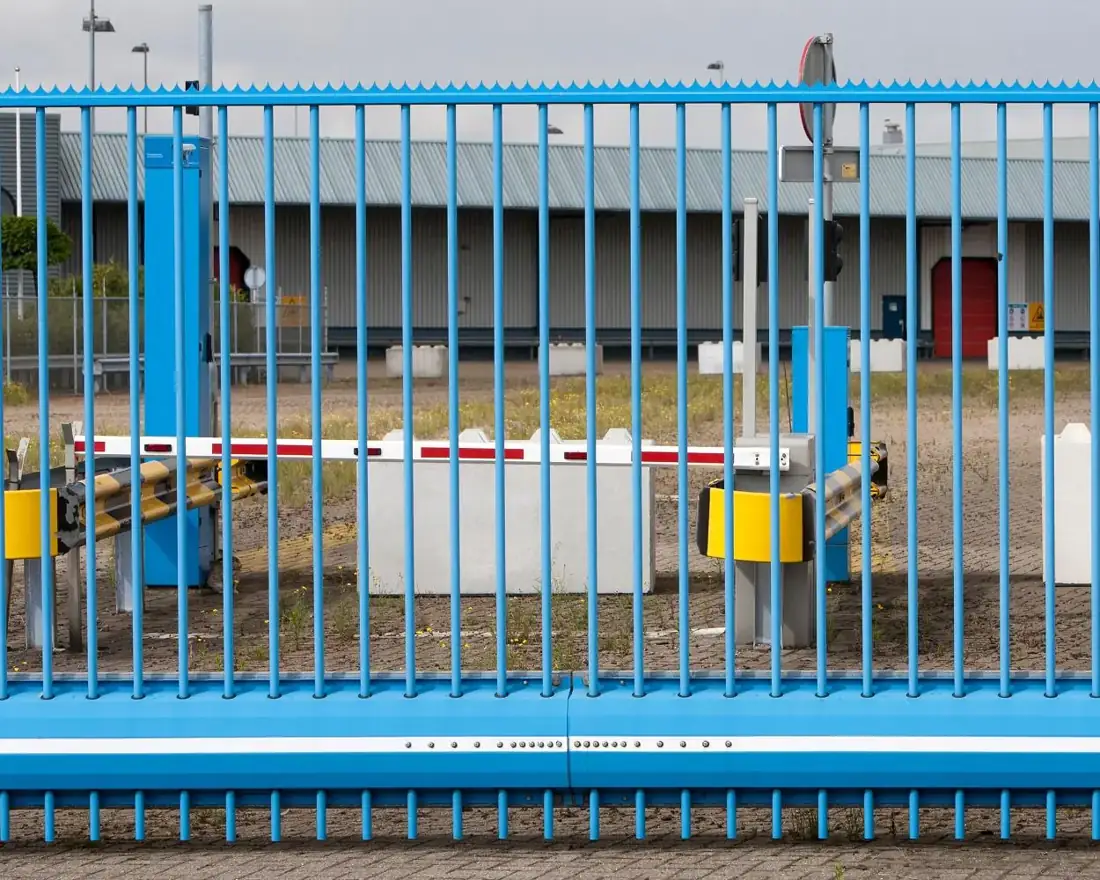
A conventional barrier arm provides a visible instruction to stop and can support controlled vehicle access. It should not be assumed to stop a determined vehicle. Some specialised barrier systems have tested impact performance, but those claims apply to specified products and configurations rather than every device sold as a security barrier.
Rising bollards also vary in purpose and capability. If hostile vehicle protection is part of the requirement, obtain specialist advice and evidence relevant to the proposed product, foundation and installation. Ask what the test demonstrates and its limitations. The surrounding boundary and approach routes also matter because vehicles may bypass an isolated protective device.
Map the traffic sequence and waiting space
Consider how a driver requests entry, where the vehicle waits and how the system confirms that the route is clear. A barrier arm is usually visible above the lane, while a lowered bollard may be less obvious to an unfamiliar driver. Signs, markings and signals should support a clear, predictable movement sequence.
Review queues during the busiest arrival period, not only average daily traffic. Allow space for vehicles to wait without blocking a public route or obstructing other site activity. The control sequence must address following vehicles and rejected requests. Neither equipment type eliminates tailgating simply by being connected to a credential reader.
Investigate excavation, drainage and services
Rising bollards normally need below-ground housings and associated civil works. Ground conditions, buried utilities and drainage can materially affect feasibility. Establish how water and sediment will be managed, and how the equipment can be accessed for repair. Repeated flooding or debris should be considered before a product is selected.
A barrier installation also needs suitable foundations, cable routes and space for its cabinet and arm movement. It may involve less extensive excavation than some bollard arrangements, but that is not guaranteed at every entrance. Request a site-specific scope showing civil works, electrical supply and surface reinstatement for each proposal.
Keep pedestrians outside the vehicle movement
An open vehicle route may attract people walking between buildings or taking a shortcut from the car park. Provide a separate, convenient pedestrian arrangement where practicable. Do not assume people will avoid the lane merely because signs tell them to, particularly if the alternative route is difficult to find or inaccessible.
A descending barrier arm and a rising bollard present different hazards, so protective measures must match the complete installation. Detection intended to recognise vehicles should not automatically be treated as person protection. Review foreseeable contact points, visibility and fault behaviour with a competent installer, including what happens if someone stops within the operating area.
Specify outages and emergency access
Decide the required behaviour during loss of power, control communications or a damaged access reader. A barrier may need manual release, and a bollard may have a specified lowering procedure, but the details depend on the equipment. Obtain instructions rather than assuming either device will automatically leave the route open.
Emergency access arrangements should be agreed within the site's wider response plan. Consider who can attend, how they reach the controls and whether they can operate them safely. Backup power is only useful when its intended function is clear, whether that is limited continued operation or moving equipment to an agreed position.
Compare maintenance and the surrounding layout
Bollard housings, moving assemblies and drainage need appropriate attention, while barriers require checks of the arm, drive, fixings and protective functions. Maintenance should follow the manufacturer's requirements and site conditions. Establish how a damaged unit will be isolated and how vehicles will be managed while the normal entrance is unavailable.
Check for easy bypass routes through verges, parking spaces or gaps beside the lane. The solution may need changes to the boundary rather than a different moving device. Compare proposals on a common basis covering installation, safety assessment, controls, servicing access and operating procedures, then select the arrangement that meets the documented objective.
FAQs
Rising bollards vs barriers: frequently asked questions
Will a standard car park barrier stop a vehicle impact?
Do not assume it will. Ordinary traffic barriers primarily manage access. Where impact resistance is required, seek specialist advice and verified performance for the particular system and installation, including the surrounding boundary and possible bypass routes.
Are rising bollards suitable for every commercial driveway?
No. Below-ground space, services, drainage and maintenance access can constrain installation. Traffic patterns and pedestrian exposure also need assessment. A measured survey should establish whether the proposed arrangement is practical before equipment is ordered.
Can barriers and rising bollards use the same access credentials?
Compatible systems can potentially share credentials or management software, but integration needs checking. The safe operating sequence, detection, emergency arrangements and fault response must be designed for each device rather than copied from the other entrance.
Further reading
Related commercial security guides
Automatic gate safety standards
A powered gate is moving machinery, not just a fence panel with a motor. Safety depends on the complete installation, its surroundings and how people can reach it.
Read the guideGate power cuts and backup
When gate power fails, the priority is a predictable, safe entrance. Decide who needs access, how the gate can be released and what remains protected before choosing backup equipment.
Read the guideCantilever vs tracked gates
Both designs slide across an entrance, but they carry their weight differently. Ground conditions, available runback and daily housekeeping often decide which arrangement is practical.
Read the guide
Sources
External references used for this guide
Plan vehicle access around the real requirement
MSME Security installs and maintains commercial automatic barriers. Arrange a free site inspection and consultation to discuss your traffic control objectives, site layout and associated security requirements.
Free site inspection
Discuss your vehicle entrance
Describe the vehicles using the site, peak arrival periods and the behaviour you need to prevent. Mention pedestrian crossings, known drainage issues and any specialist impact protection requirement.
Or email info@msmesecurity.co.uk
- Monday to Friday: 9am to 6pm
- Saturday and Sunday: 11am to 5pm