
Commercial entrance planning
Automatic gate safety standards: understanding the complete installation
A powered gate is moving machinery, not just a fence panel with a motor. Safety depends on the complete installation, its surroundings and how people can reach it.
- Free site inspection and quotation
- Engineer led, no salespeople
- No callout charges for 3 months after installation
Before you buy
Assess the gate in the place it operates
Commercial gate safety starts with foreseeable use and misuse at the actual entrance. A heavy leaf may create crushing, trapping, shearing and impact hazards at several positions during movement. Vehicle traffic is only part of the picture: staff, visitors and members of the public may also approach the opening.
An individual component labelled as suitable for gate automation does not establish that the finished gate is safe. Geometry, controls, protective devices, commissioning and maintenance all contribute. Existing manual gates converted to power operation need a proper assessment of their structure and the hazards created by automation.
This guide explains the questions a premises manager should ask rather than prescribing a universal design. Competent specialists should assess the particular installation, applicable legal duties and current standards. Stop using a gate where a serious safety concern is identified and obtain appropriate assistance before returning it to service.
Understand the role of BS EN 12453
BS EN 12453 addresses safety in use of power-operated doors and gates. Its relevance should be considered alongside the applicable legal requirements, other relevant standards and the manufacturer's instructions. Confirm the current edition and scope with the competent person responsible for the design or assessment rather than relying on an old checklist.
Following a named standard is not a substitute for identifying site-specific hazards. A gate opening beside a public footpath presents different exposure from a supervised service entrance. HSE guidance highlights the need to assess the complete machine and protective measures. Ask for the reasoning behind the selected safeguards, not just a product list.
Identify hazards through the full movement
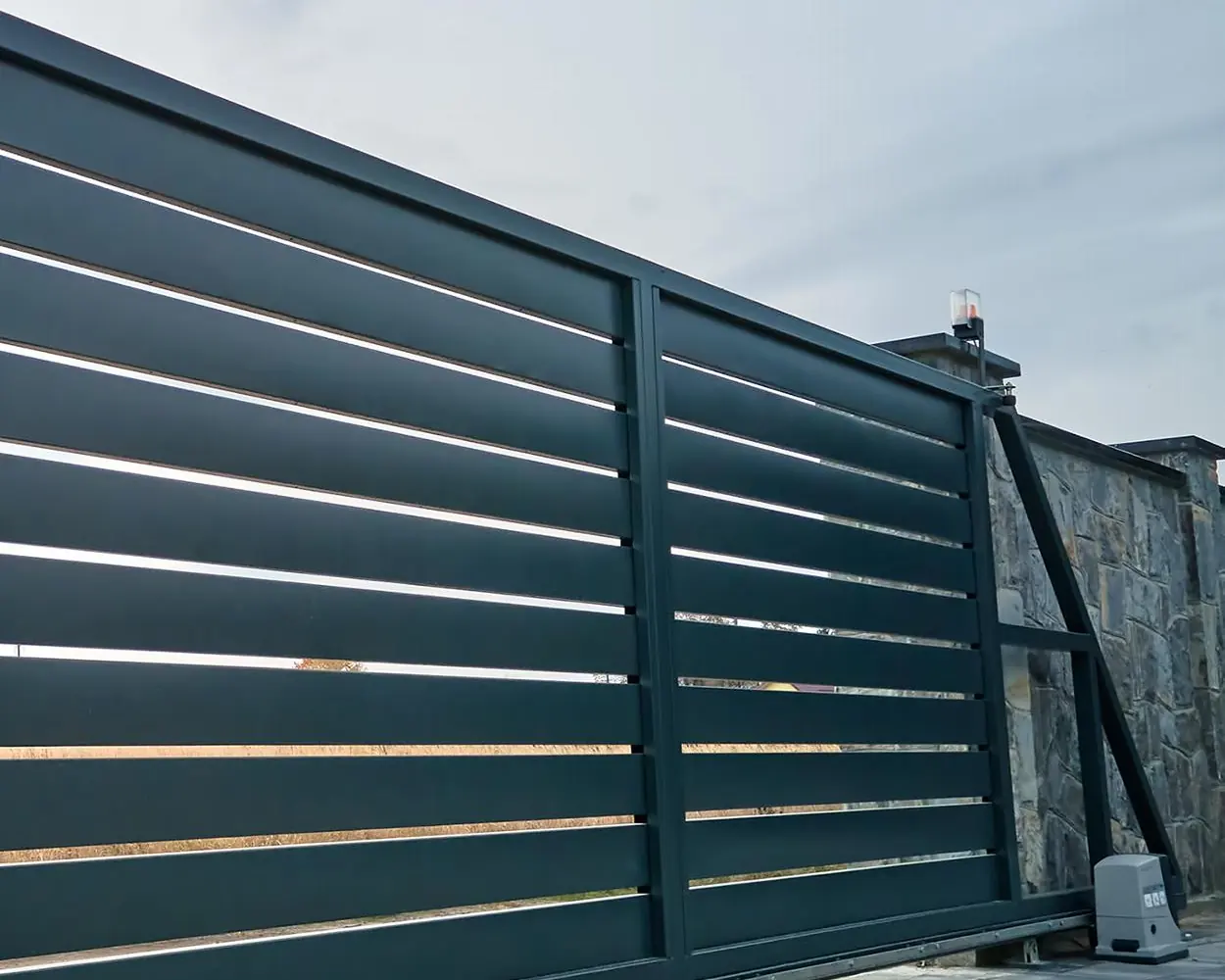
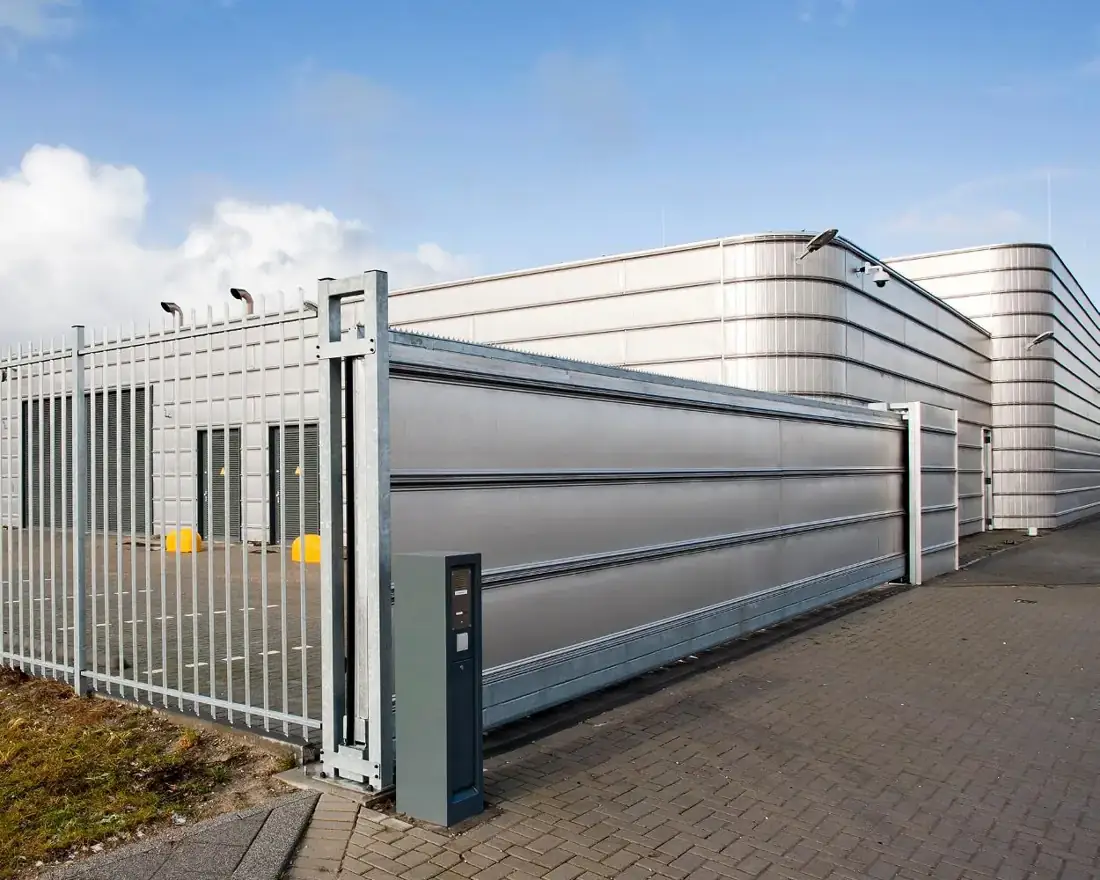
Inspect the leading edge, hinge areas, posts, support rollers and any space into which a sliding gate travels. A person may become trapped behind a moving leaf even when the main entrance is clear. Openings in a gate or fence can allow limbs to reach moving parts from an apparently separate area.
Ground levels, nearby walls and parked vehicles can change the available clearance. Consider children and people unfamiliar with the premises where their presence is foreseeable. A dedicated pedestrian route helps separate movements, but a sign alone does not remove a trapping hazard or prevent someone approaching the gate from an unexpected direction.
Use force limitation as one part of protection
Force limitation aims to control the forces produced when a moving gate encounters an obstruction. The required performance depends on the applicable design criteria and risk assessment. Motor settings alone do not demonstrate acceptable operation, and a gate that reverses after contact may still expose someone to dangerous force before it stops.
Where force limitation is part of the safeguarding approach, appropriate measurement and testing are needed at relevant positions. Ask for documented commissioning results and arrangements for subsequent checks. Changes to speed, hinges, motor settings or gate weight may alter performance, so a previous test should not be treated as permanent evidence regardless of later modifications.
Match edges and detection to the hazard
Safety edges can detect contact along the positions they protect and initiate the designed stop or reversal. Their suitability depends on coverage, response and integration with the control system. Exposed hinge gaps, rollers or the rear travel zone may need guarding or other measures rather than relying on a leading-edge strip alone.
Photocells can detect an interruption in their beam, but a single beam does not cover every person or trapping location. Conventional vehicle detection should not be assumed to provide all necessary person protection. Device placement, monitoring and fault behaviour must fit the risk assessment, with testing that demonstrates the intended response under realistic conditions.
Ask for clear handover evidence
The handover should identify the installation, operating limits, safety functions and responsibilities for routine checks and maintenance. Ask what conformity documentation is applicable to the work and who takes responsibility for the completed machine. Retain drawings, instructions and relevant test records where the premises team can find them after staff or contractor changes.
Industry guidance from organisations such as DHF can help frame questions about powered gate safety and competence, but training or a component certificate does not replace assessment of your gate. Clarify what was inspected, what was tested and any remaining restrictions. Unresolved safety defects should be explicitly addressed rather than hidden in general service notes.
Keep the assessment live throughout service
Gate safety can deteriorate through collision damage, worn hinges, contaminated tracks or unauthorised adjustments. Establish checks and maintenance appropriate to usage, environment and the manufacturer's instructions. Record defects and isolate unsafe equipment with competent support. Staff should know how to report damage without being expected to test hazardous movements themselves.
Review the assessment after changes to traffic routes, fencing, nearby storage or control methods. Remote opening and automatic closing can alter how people encounter the moving gate. A maintenance visit should consider safety functions as well as whether the motor runs, and remedial work should be followed by appropriate verification before normal service resumes.
FAQs
Automatic gate safety standards: frequently asked questions
Do photocells make an automatic gate safe on their own?
Not generally. Their coverage and function must be assessed against all relevant hazards. Crushing, hinge and rear travel risks may require other protective measures. A beam across the entrance does not detect every foreseeable person or obstruction.
Is force testing required for every gate arrangement?
The appropriate verification depends on the design, protective measures and applicable standards. Where force limitation is relied upon, suitable force measurement is important. A competent specialist should explain the testing approach and retain the relevant results.
Does servicing remove the need for a risk assessment?
No. Maintenance and risk assessment serve related but different purposes. Servicing keeps the equipment in condition; the assessment considers hazards and suitable controls. Both need reviewing when the gate, its use or its surroundings change.
Further reading
Related commercial security guides
Gate power cuts and backup
When gate power fails, the priority is a predictable, safe entrance. Decide who needs access, how the gate can be released and what remains protected before choosing backup equipment.
Read the guideCantilever vs tracked gates
Both designs slide across an entrance, but they carry their weight differently. Ground conditions, available runback and daily housekeeping often decide which arrangement is practical.
Read the guideSwing gate motor types
Choosing a swing gate motor starts with the gate geometry and operating conditions, not appearance alone. The operator must suit the leaf, supporting structure and safety design.
Read the guide
Sources
External references used for this guide
Review your gate as a complete machine
Arrange a free site inspection and consultation with MSME Security to discuss automatic gate condition, site hazards and maintenance requirements for your commercial entrance.
Free site inspection
Discuss powered gate safety
Tell us the gate type, how it is operated and whether pedestrians can reach it. Include recent alterations, damage and any available commissioning or maintenance records.
Or email info@msmesecurity.co.uk
- Monday to Friday: 9am to 6pm
- Saturday and Sunday: 11am to 5pm