
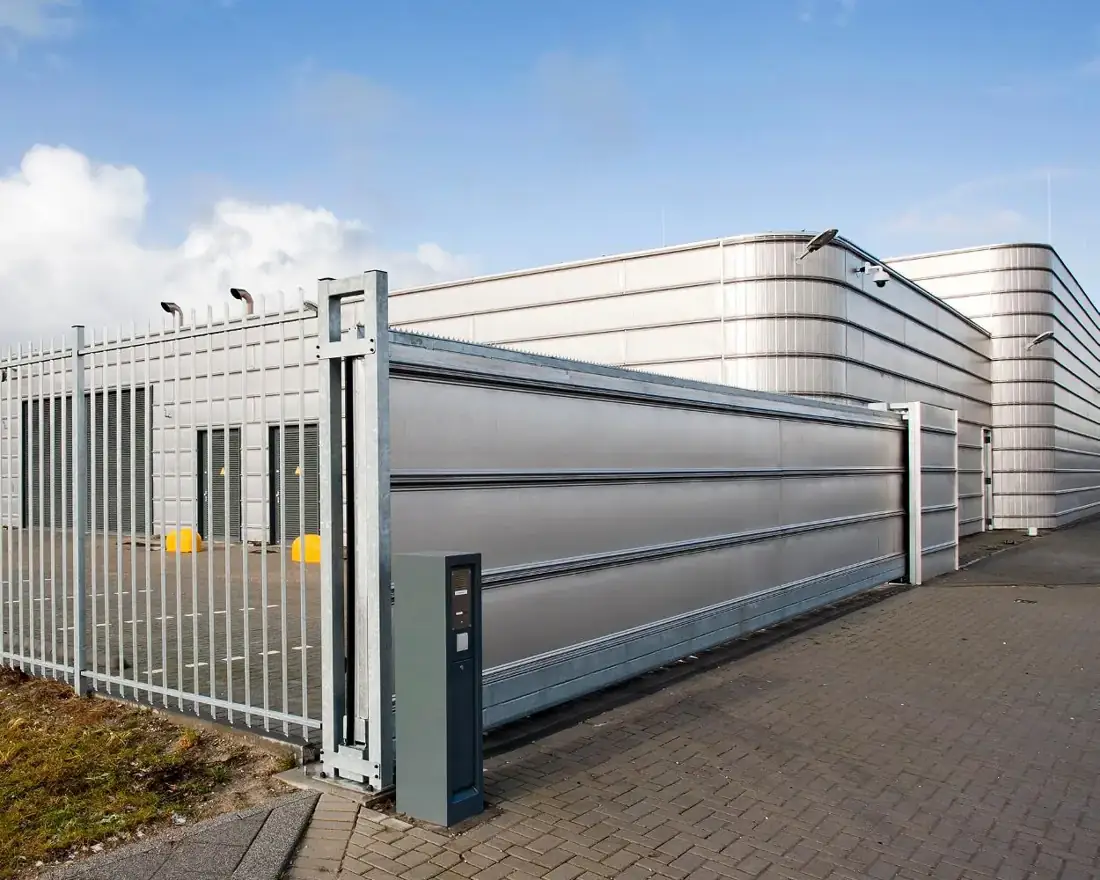
Commercial entrance planning
Automatic gate power cuts and battery backup: planning safe access
When gate power fails, the priority is a predictable, safe entrance. Decide who needs access, how the gate can be released and what remains protected before choosing backup equipment.
- Free site inspection and quotation
- Engineer led, no salespeople
- No callout charges for 3 months after installation
Before you buy
Define the outage response before buying a battery
An automatic gate may stop moving when its supply fails, remain mechanically held or behave differently if backup power is installed. There is no single outage response shared by every motor and controller. The expected behaviour must be confirmed for the actual equipment and the way the complete entrance is configured.
The business decision is broader than whether vehicles can still arrive. Consider staff leaving, delivery queues, emergency attendance and the security of an unattended yard. A gate that stays closed may protect stock but obstruct necessary access; an open gate may preserve movement while exposing areas that normally rely on the perimeter.
Write a short outage procedure identifying the responsible person and the safe temporary operating arrangement. Include loss of the gate supply separately from loss of communications, because a powered gate can still become inaccessible if its only entry method depends on an unavailable network service.
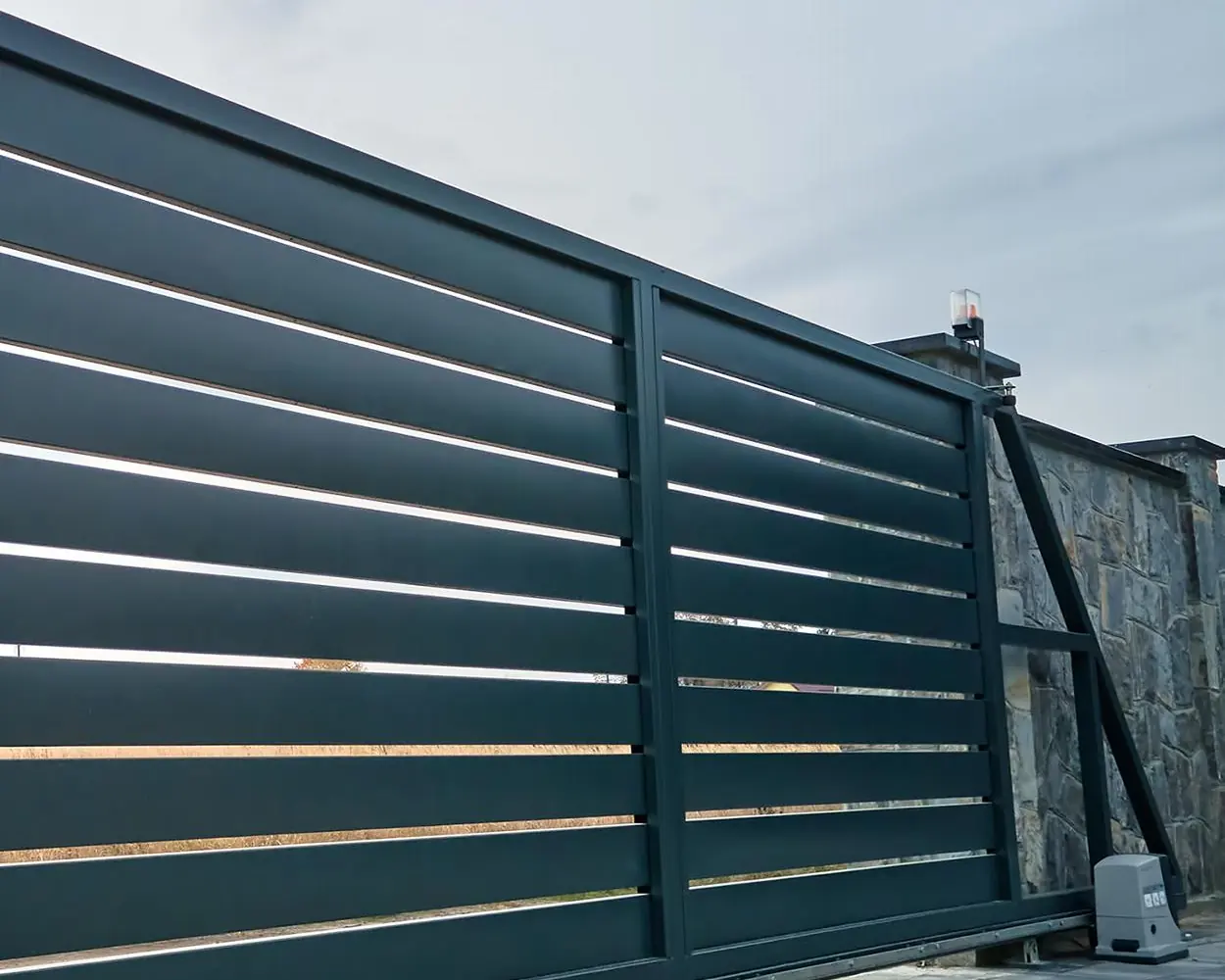
Know how manual release actually works
Many operators provide a manual release mechanism that disengages or releases the drive so the gate can be moved by hand. The method varies by product and may require a key or tool. Obtain the manufacturer's instructions and arrange a demonstration by a competent person rather than discovering the process during an outage.
Manual release does not make a damaged or unstable gate safe to push. A heavy leaf may move unexpectedly because of slope, wind or mechanical failure. Staff need to know when not to intervene, how the gate is secured against unintended movement and when a specialist is required. Do not improvise by forcing the drive.
Assess backup capacity against realistic demand
Battery backup may support selected operations after mains power is lost, but its capability depends on the operator, battery condition, gate load and accessories. Some arrangements support an initial opening rather than normal traffic for an extended outage. Ask for the intended function and limitations in writing for the specific installation.
Avoid accepting a universal runtime or cycle count without the conditions behind it. Cold weather, repeated movements and ageing batteries can reduce available capacity. Consider standby consumption as well as motor operation. The backup must support the relevant safety controls and detection for any powered movement that continues, not merely energise the motor.
Choose a controlled open or closed response
Fail open and fail closed are often used loosely for vehicle gates. Specify the actual sequence: whether the gate opens once on supply loss, remains in position, continues on backup or needs manual intervention. State what happens when the battery reaches its limit and whether a person must authorise further movement.
The choice should reflect site security, emergency arrangements and the risks created by moving or stationary leaves. Do not assume an automatic opening is always safer, especially where movement affects pedestrians or a public route. Likewise, a closed entrance is not an adequate plan if people or emergency responders cannot obtain necessary access.
Provide emergency access without creating a bypass
Discuss emergency attendance requirements with the relevant parties for the premises. A secure, agreed release method may be needed when normal access systems are unavailable. The arrangement should be understandable to authorised responders without publishing reusable access details or leaving keys where any passer-by can retrieve them.
Keep pedestrian escape separate from the assumption that a vehicle gate will open. Review the wider escape and access strategy, including people who cannot move a heavy leaf manually. If an emergency route depends on electrical equipment, its dependencies and failure response need competent assessment rather than reliance on an ordinary remote control.
Plan connectivity and power together
A backup supply for the gate operator does not automatically power the intercom, access controller, network switch or remote answering service. Map the complete authorisation chain and identify which functions must remain available. A working motor is of limited use if the only credential reader or visitor answering route has lost power.
Coordinate electrical work with the appropriate competent contractor. Confirm the suitability of batteries, chargers and enclosures for the installation and environment. Do not attach an unapproved backup unit merely because its output voltage appears correct. Incorrect arrangements can affect charging, protective circuits, safety functions and the manufacturer's intended operation.
Rehearse recovery as well as the outage
An acceptance test should demonstrate the agreed power-failure response under controlled conditions. Check access from both sides, permitted powered movements and the manual release procedure. Record any limits on who can operate the system, and ensure the test does not leave a moving gate unmanaged or compromise necessary site security.
After power returns, confirm how the drive re-engages and whether a reset or position reference is required. Inspect safety devices and verify normal behaviour before restoring automatic use. Include battery condition and release mechanisms in planned maintenance, and review the procedure after actual outages reveal unexpected queues, communication gaps or difficulty locating authorised staff.
FAQs
Gate power cuts and backup: frequently asked questions
Will battery backup keep the gate running all day?
Not necessarily. Capacity depends on the equipment, battery health, movements and standby load. Some systems are intended only to reach a safe position. Confirm the specified outage function and test it under controlled conditions appropriate to the installation.
Can anyone manually release an automatic gate?
Only authorised people following the correct procedure should attempt it. A heavy or damaged gate can move dangerously when released. Keep instructions and necessary keys accessible to the right people and arrange training on the specific operator.
Should our gate open automatically in a power cut?
That depends on the site risk assessment and access strategy. Security, emergency attendance, pedestrian exposure and gate movement all matter. Specify the intended sequence rather than relying on a generic fail-open or fail-closed label.
Further reading
Related commercial security guides
Automatic gate safety standards
A powered gate is moving machinery, not just a fence panel with a motor. Safety depends on the complete installation, its surroundings and how people can reach it.
Read the guideSwing gate motor types
Choosing a swing gate motor starts with the gate geometry and operating conditions, not appearance alone. The operator must suit the leaf, supporting structure and safety design.
Read the guideCantilever vs tracked gates
Both designs slide across an entrance, but they carry their weight differently. Ground conditions, available runback and daily housekeeping often decide which arrangement is practical.
Read the guide
Sources
External references used for this guide
Make your gate outage procedure practical
MSME Security installs and maintains commercial automatic gates. Arrange a free site inspection and consultation to discuss release methods, backup requirements and the entrance’s operating arrangements.
Free site inspection
Discuss gate backup and manual release
Tell us your motor type, normal traffic levels and what needs to happen during an outage. Mention intercoms, access controls and any designated emergency access route.
Or email info@msmesecurity.co.uk
- Monday to Friday: 9am to 6pm
- Saturday and Sunday: 11am to 5pm