
Fire safety guide
Smoke alarm installation for business premises: standalone alarms or a fire alarm system?
Searching for smoke alarm installation often starts with a simple question: will a few battery alarms do? For most commercial buildings the honest answer depends on the fire risk assessment.
- Free site inspection and quotation
- Engineer led, no salespeople
- No callout charges for 3 months after installation
Before you buy
Two very different kinds of equipment
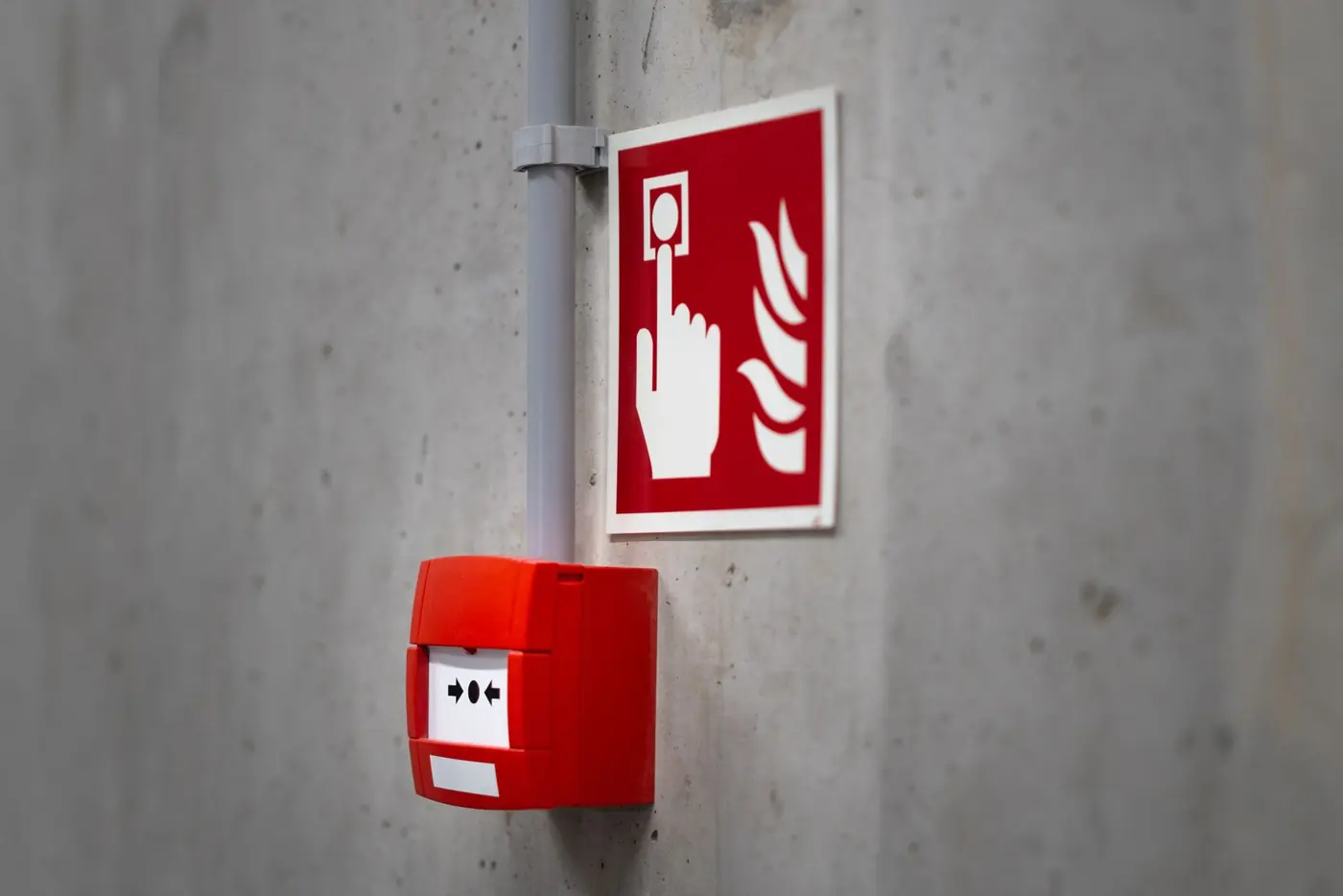
A standalone smoke alarm is a self contained unit that detects smoke and sounds its own built in alarm. A fire alarm system links detectors, call points and sounders to a control panel, so a fire detected in one place warns people throughout the building.
In homes, standalone or interlinked smoke alarms are common. Business premises are different because the Regulatory Reform (Fire Safety) Order 2005 requires the responsible person to assess fire risk and provide suitable means of detection and warning.
This guide explains how the choice is normally made. It is general information; a competent fire risk assessor should confirm what your premises require.
Let the fire risk assessment decide
The fire risk assessment looks at how a fire could start, who could be harmed and how quickly people would know and get out. The detection and warning arrangements follow from that, not from what equipment is cheapest to fit.
Government guidance for small, simple premises accepts that in some cases, such as a single open room where a fire would be obvious to everyone, a shouted warning or simple arrangement may be adequate. Most multi-room or multi-storey workplaces need more.
If your premises have changed, for example new partitions, extra storage or night working, review the assessment. Detection that was once adequate may no longer be.
Where standalone smoke alarms fall short
A standalone alarm only sounds where it is fitted. A fire in a closed stock room may not be heard in an office at the other end of the building until smoke has spread.
There is no panel to show where the alarm came from and no manual call points for staff to raise the alarm. Batteries and units also need checking individually, which is easy to overlook across a large building.
Domestic smoke alarms are designed for homes. Using them as the main warning in a commercial building rarely reflects the British Standard for non domestic systems, BS 5839-1.
What a fire alarm system adds
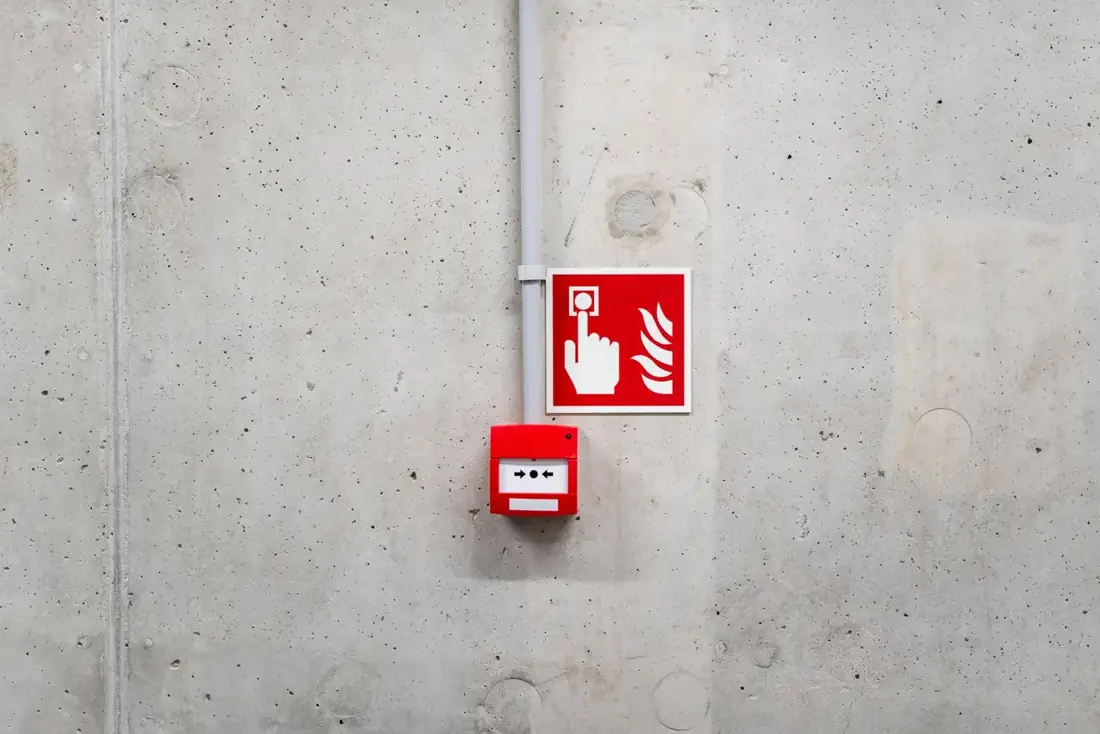
A system warns everyone at once, wherever the fire starts. Call points on escape routes let anyone raise the alarm, and sounders and beacons are positioned so the warning reaches every occupied area.
The panel identifies the zone or individual device that triggered, which helps staff and the fire service find the problem. It also monitors faults, such as a disconnected detector or a failed battery.
Detectors can be matched to each room, with heat detection in kitchens and smoke or multi sensor detection elsewhere, which helps reduce false alarms.
Upkeep and testing compared
Standalone alarms need regular button testing and replacement at the end of their stated life. Each unit is its own responsibility, so a simple record is useful.
A fire alarm system needs a weekly call point test by a nominated person and servicing by a competent person, which BS 5839-1 recommends at least every six months. Both should be recorded in the log book.
Whichever applies, make sure someone owns the task. Equipment that is never tested gives little assurance that it will work when needed.
Mixed buildings and special cases
Some buildings combine business and residential use, such as a shop with a flat above. These need particular care because the rules and the risks differ between the parts. Take specialist advice rather than assuming either approach.
Sleeping accommodation, vulnerable occupants or high fire loads all increase the need for a designed system. So does a layout where people cannot easily see or hear what is happening elsewhere.
Do not install or alter mains powered alarms or panels yourself. Wiring should be carried out by a competent person to current regulations.
Questions to ask before choosing
Ask how many rooms and floors there are, whether anyone works alone or out of hours, and whether a fire in one area would be noticed quickly everywhere else. These questions often settle the matter before equipment is discussed.
Check what your insurer, landlord or lease requires. Some leases make the tenant responsible for maintaining a system the landlord installed, while others expect the tenant to provide their own detection.
Ask whoever carries out the fire risk assessment to state the detection and warning arrangements clearly, so an installer can design to that brief rather than guessing at the level of protection needed.
Finally, consider who will test and record the equipment each week. A simple arrangement that is properly looked after is better than a complex one nobody checks, but neither replaces what the assessment requires.
FAQs
Smoke alarms or a fire alarm system?: frequently asked questions
Can a small office just use battery smoke alarms?
Possibly, if the fire risk assessment concludes that is adequate for a very simple layout. Most offices with several rooms need a system that warns everyone. Ask a competent fire risk assessor to confirm.
Are smoke alarms and smoke detectors the same?
Not quite. A smoke alarm sounds its own built in alarm. A smoke detector is part of a fire alarm system and signals a control panel, which then operates sounders throughout the building.
Who is responsible for fire detection in a workplace?
The responsible person under the Fire Safety Order, usually the employer, owner or person in control of the premises. They must ensure a fire risk assessment is carried out and acted on.
Can standalone alarms be upgraded to a system?
They are usually replaced rather than upgraded, because a system uses detectors connected to a panel. A survey will confirm what can be reused, such as cable routes in some cases.
Further reading
Related commercial security guides
Fire alarm categories
A fire alarm category describes a protection objective and its coverage. Choose it through the fire risk assessment and competent design, not by assuming that every commercial building needs the same arrangement.
Read the guideWireless fire alarms
Wireless fire alarms replace some signal cabling with radio communication. Their suitability depends on a surveyed radio design, appropriate equipment and a maintenance plan that treats batteries as managed safety components.
Read the guideSounders, beacons and call points
A fire alarm must let people raise a warning and recognise it wherever they need to act. Device placement should reflect real occupants, working conditions and escape arrangements, not just convenient cable routes.
Read the guideConventional vs addressable fire alarms
Understand zone and device identification, wiring, fault information and why the fire risk assessment determines the final design.
Read the guide
Sources
External references used for this guide
Not sure what your building needs?
Arrange a free site inspection and consultation so an engineer can look at the building, talk through how it is used and explain the options in plain terms.
Free site inspection
Discuss fire detection for your premises
Tell us about the building, how it is used and what your fire risk assessment says, and we will arrange a site inspection.
Or email info@msmesecurity.co.uk
- Monday to Friday: 9am to 6pm
- Saturday and Sunday: 11am to 5pm