
Commercial alarm planning
Fire alarm categories explained: L1 to L5, P1, P2 and M
A fire alarm category describes a protection objective and its coverage. Choose it through the fire risk assessment and competent design, not by assuming that every commercial building needs the same arrangement.
- Free site inspection and quotation
- Engineer led, no salespeople
- No callout charges for 3 months after installation
Before you buy
Define what the detection must achieve
Fire alarm specifications often contain a short category label with significant consequences for detector coverage. BS 5839-1 provides recommendations for fire detection and alarm systems in non-domestic premises. Its categories distinguish life protection, property protection and systems that rely on manual operation, helping those involved describe the intended objective.
The category is not a quality rating for the equipment. A well-installed system can still be unsuitable if its coverage does not match the risks. Conversely, specifying the widest coverage without considering the building, occupants and evacuation arrangements does not complete the design or establish compliance with fire safety duties.
Start with a suitable fire risk assessment and competent advice. Identify sleeping accommodation, vulnerable occupants, unusual processes and areas that may be empty for long periods. This guide explains the category labels rather than choosing between conventional and addressable panels or prescribing an arrangement for a particular property.
Category M and the life protection framework
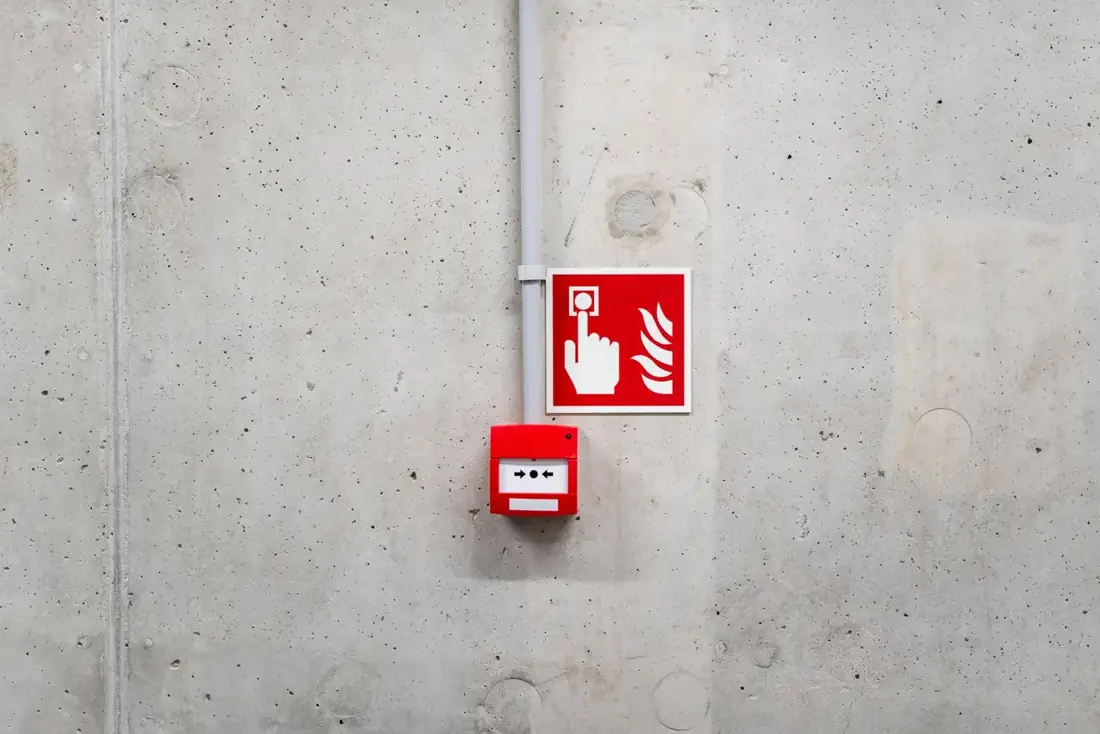
Category M describes a manual fire alarm system, in which people raise the alarm using manual call points rather than relying on automatic fire detection. Whether that is adequate depends on the premises and risk assessment. It should not be assumed suitable merely because a building is occupied during normal business hours or staff have received general fire training.
The L categories concern life protection through automatic detection coverage, alongside the associated alarm arrangements. They are intended to support timely warning and escape. The number indicates a coverage concept rather than the age or sophistication of the panel. Ask the designer to show the proposed coverage on drawings and explain how it supports the evacuation strategy and the people using the building.
L1 and L2: extensive and risk-focused coverage
Category L1 broadly provides automatic detection throughout the building, subject to the recommendations and permitted exceptions in the applicable standard. It aims to give the earliest practicable warning of fire across the premises. Describing it simply as a detector in every space can be misleading because detailed siting and any exclusions still require competent consideration and documentation.
Category L2 includes the coverage associated with L3 and adds specified areas where a fire could present a particular risk to life. Those additional areas depend on the building and assessment, rather than a universal list of room names. Ask which rooms or hazards are included, why they have been selected and how future changes of use will be reviewed.
L3, L4 and L5 serve different purposes
Category L3 generally includes escape routes and rooms opening onto them, with the aim of warning occupants before escape routes become impassable. Category L4 focuses on escape routes such as circulation areas and stairways. Neither label alone explains every siting decision, and neither should be chosen without considering how smoke or fire could affect occupants elsewhere in the building.
Category L5 addresses a specific life safety objective identified for the premises. It is not simply a lower version of L4 or a shorthand for minimal coverage. The objective and coverage need to be explicitly defined. An L5 design might protect a particular hazard or support a specific fire safety measure, making its written rationale especially important for future alterations.
P1 and P2 address property protection
Category P1 broadly provides automatic detection throughout the building for property protection, while P2 provides detection in defined parts where the property risk warrants it. The selected coverage should reflect the protection objective and any insurer requirements. Early detection has limited practical value for property protection if no suitable person or service receives and acts on an alarm when the premises are empty.
Life and property protection objectives can be combined in one design. A specification may therefore include both L and P descriptions, with clear drawings showing what each contributes. Do not assume that a property protection category automatically resolves the life safety needs. Agree monitoring and response separately, and check local fire and rescue service arrangements rather than assuming automatic attendance.
Record the category and protect its intent
Ask for the proposed category, design basis, relevant standard edition and any agreed variations to be recorded. The drawings should make boundaries and exclusions understandable. Where different parties advise on insurance, fire risk and system design, resolve conflicting expectations before installation. A single category label in a quotation is not a substitute for an intelligible specification and documented responsibilities.
Review coverage when rooms change use, partitions move or a different occupancy pattern develops. A new store behind an office or a previously unused mezzanine may alter the original assumptions. Keep design information with the fire safety records so that future maintainers and risk assessors can understand what the system was intended to achieve, rather than trying to infer it from existing detector positions.
FAQs
Fire alarm categories: frequently asked questions
Is L1 legally required in every workplace?
No single category applies to every workplace. The required precautions depend on the fire risk assessment, relevant legal duties and any other applicable requirements. Seek competent advice for the actual premises.
Is L5 less protective than L4?
Not in a simple ranking. L5 is designed around a specific life safety objective. Its adequacy depends on whether that objective and the associated detection coverage properly address the identified risk.
Can one system have life and property categories?
Yes, designs can combine objectives. Ask for the life and property protection requirements to be stated clearly, with suitable drawings, monitoring arrangements and an explanation of any differences in coverage.
Further reading
Related commercial security guides
Wireless fire alarms
Wireless fire alarms replace some signal cabling with radio communication. Their suitability depends on a surveyed radio design, appropriate equipment and a maintenance plan that treats batteries as managed safety components.
Read the guideReduce false fire alarms
Repeated unwanted fire alarms disrupt work and can weaken trust in the warning system. Reduce them through investigation and controlled improvements, never by encouraging staff to ignore signals or leave detection disabled.
Read the guideSounders, beacons and call points
A fire alarm must let people raise a warning and recognise it wherever they need to act. Device placement should reflect real occupants, working conditions and escape arrangements, not just convenient cable routes.
Read the guide
Sources
External references used for this guide
Clarify the purpose of your fire detection
MSME Security installs and maintains commercial fire alarms and offers free site inspections and consultations. Bring your fire risk assessment recommendations to a discussion about the required scope.
Free site inspection
Discuss fire alarm coverage
Share the category currently recorded, the way the building is occupied and any written recommendations about coverage. Identify planned changes that could affect the original protection objective.
Or email info@msmesecurity.co.uk
- Monday to Friday: 9am to 6pm
- Saturday and Sunday: 11am to 5pm