
Commercial alarm planning
Fire alarm sounders, beacons and call points in workplaces
A fire alarm must let people raise a warning and recognise it wherever they need to act. Device placement should reflect real occupants, working conditions and escape arrangements, not just convenient cable routes.
- Free site inspection and quotation
- Engineer led, no salespeople
- No callout charges for 3 months after installation
Before you buy
Consider who needs to receive the warning
A detector can identify a fire without ensuring that everyone understands the warning. Machinery, closed doors, hearing protection and individual hearing needs can affect how an alarm is received. Assess the building in use, including quieter rooms, isolated work areas and spaces occupied only occasionally by visitors or contractors.
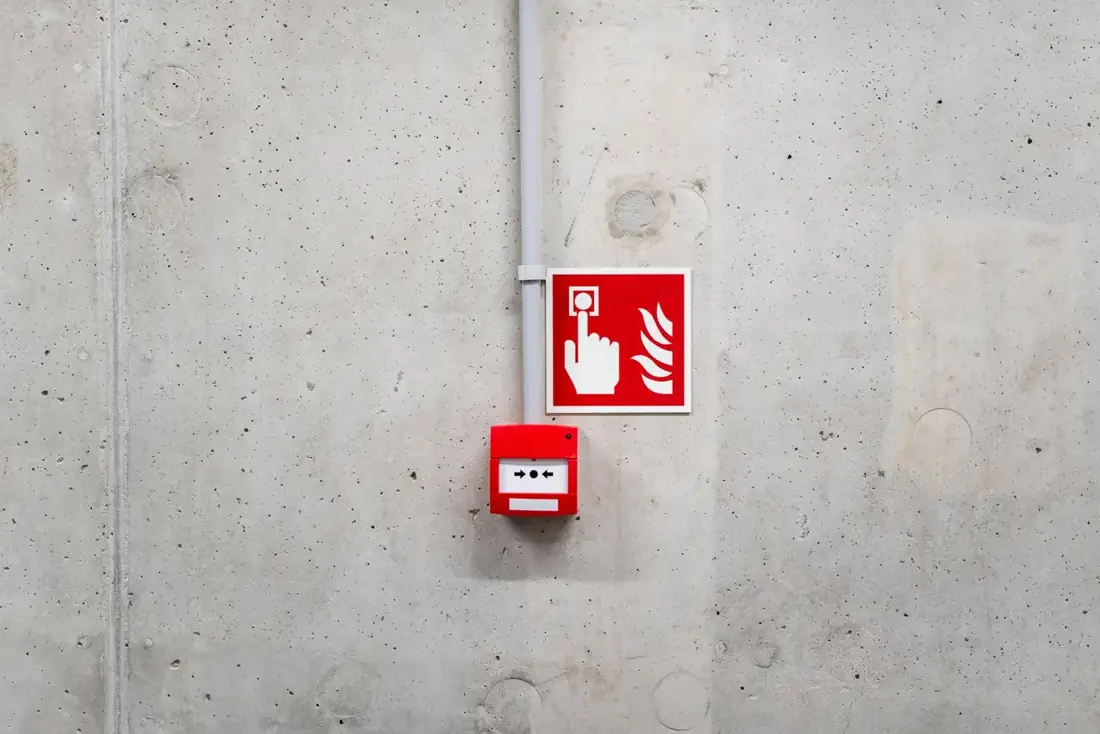
Manual call points serve a different function from sounders and visual devices: they allow a person to initiate the alarm. The design must make these controls accessible and recognisable while providing suitable warning throughout the required areas. Good coverage of one function does not compensate for weaknesses in another.
BS 5839-1 recommendations and relevant product standards inform design, but exact siting and performance need competent assessment. This guide focuses on the human interface with the alarm rather than deciding detection categories. Start with the evacuation strategy and the people who may need assistance or an alternative means of warning.
Audibility must be assessed under working conditions
Sounder coverage depends on the layout, background noise and the barriers between a device and its listeners. Closed fire doors can significantly affect sound transmission. A demonstration in an empty building may not represent a production shift. Ask how audibility will be assessed in the conditions that matter, including rooms used behind closed doors and areas with operating machinery.
Do not treat simply increasing volume as the only solution. Additional or differently positioned devices may provide a better arrangement, while very loud environments can require complementary warning methods. The design should account for relevant recommendations and avoid creating avoidable problems near sounders. Record testing and discuss limitations with the competent designer rather than asking staff to decide whether the alarm seems loud enough.
Visual alarm devices need a designed coverage area
A flashing indicator on a panel is not automatically a suitable visual alarm device for warning occupants. Purpose-designed visual alarm devices, often called VADs, have coverage characteristics that need to match their installation. BS EN 54-23 addresses visual alarm devices. Product selection, mounting position and the shape of the room influence whether the intended visual warning can be received.
Consider partitions, shelving, viewing directions and lighting conditions. A device visible from an entrance may not provide suitable warning throughout an occupied work area. Ask the designer to show the intended coverage and explain how it supports the evacuation strategy. Visual warnings need planned integration with the fire alarm, not an informal collection of flashing lights added wherever power happens to be available.
Include deaf and hard of hearing people
Discuss warning needs respectfully with staff and consider visitors who may not have disclosed a hearing impairment. Visual devices can be part of the answer, but they are not automatically sufficient in every circumstance. Toilets, isolated rooms and tasks requiring sustained attention may need particular consideration so that the warning arrangement does not depend on someone noticing activity elsewhere.
Where necessary, competent advice may identify additional devices or individual arrangements, such as suitable paging or tactile warning equipment. These measures need management, testing and a clear link to the emergency plan. Do not rely solely on a colleague being nearby without assessing absence and changing work patterns. Personal emergency evacuation arrangements should address warning as well as the practical means of leaving safely.
Call points should support a clear route to warning
Manual call points are generally positioned so people can raise the alarm readily while following escape routes, including near relevant exits. Detailed location, travel distance and mounting recommendations need to be assessed for the premises. Avoid quoting a single spacing rule as if it resolves every layout, especially where mobility needs or unusual hazards affect the design.
Keep call points visible, accessible and unobstructed. Stock displays, open door leaves and new furniture can hide a device that was easy to find at handover. Review protective measures if accidental operation is a recurring problem, but do not add a barrier that makes genuine use confusing or difficult. Make sure signage and staff instructions match the installed equipment and operating method.
Maintain the warning chain after layout changes
Include sounders, visual devices and call points in commissioning and periodic inspection arrangements. A weekly alarm test is useful but does not establish that all devices meet every design criterion. Staff should know how to report a quiet sounder, damaged call point or obscured visual device. Record the concern and arrange appropriate investigation rather than assuming that another nearby unit provides adequate coverage.
Reassess warning coverage after introducing machinery, partitions, acoustic treatments or new occupancy patterns. Brief new staff and contractors on the alarm signal and how to raise it. Keep device locations and any individual warning arrangements within the fire safety records. The aim is a consistent route from discovering danger to alerting people who need to take action, including those outside the main working area.
FAQs
Sounders, beacons and call points: frequently asked questions
Are ordinary flashing beacons suitable as VADs?
Not automatically. A visual warning needs equipment and coverage appropriate to its fire alarm role. Ask for the relevant product performance and design basis, rather than relying on the fact that a light flashes.
Does every deaf employee need the same device?
No. Assess individual needs, work locations and the evacuation strategy. A suitable arrangement may combine visual warning with other measures, supported by management and testing rather than a single generic solution.
Can furniture be placed in front of a call point?
It must remain readily visible and accessible for its intended use. Review layouts when furniture or stock moves, and seek competent advice if a call point needs relocation rather than allowing access to become obstructed.
Further reading
Related commercial security guides
Fire alarm categories
A fire alarm category describes a protection objective and its coverage. Choose it through the fire risk assessment and competent design, not by assuming that every commercial building needs the same arrangement.
Read the guideWireless fire alarms
Wireless fire alarms replace some signal cabling with radio communication. Their suitability depends on a surveyed radio design, appropriate equipment and a maintenance plan that treats batteries as managed safety components.
Read the guideReduce false fire alarms
Repeated unwanted fire alarms disrupt work and can weaken trust in the warning system. Reduce them through investigation and controlled improvements, never by encouraging staff to ignore signals or leave detection disabled.
Read the guide
Sources
External references used for this guide
Check how people receive and raise the alarm
MSME Security offers free site inspections and consultations for commercial fire alarm projects. Explain warning difficulties, call point access problems and any recommended improvements from your fire risk assessment.
Free site inspection
Review workplace fire warning devices
Describe normal noise levels, changing layouts and the areas where people may miss the warning. Flag accessibility requirements without sharing unnecessary personal or medical details in the initial enquiry.
Or email info@msmesecurity.co.uk
- Monday to Friday: 9am to 6pm
- Saturday and Sunday: 11am to 5pm