

CCTV planning guide
How many CCTV cameras does a business need?
There is no reliable cameras-per-square-metre formula. A useful design starts with the scenes you need to record and removes overlap that adds cost without adding information.
- Free site inspection and quotation
- Engineer led, no salespeople
- No callout charges for 3 months after installation
Before you buy
Count views before counting cameras
Two buildings with the same floor area can need very different CCTV coverage. A small unit with several shutter doors, a shared yard and a high-value store may present more security tasks than a larger open office with one staffed entrance. Camera totals therefore come after a site survey, not before it.
Begin with a floor plan or a simple sketch. Mark public and staff entrances, delivery doors, cash or stock handling points, car parks, external storage and any place involved in a previous incident. Then describe what a recording should let an authorised person see in each location.
Separate detection, observation and identification tasks. A wide view may show movement across a yard, while a narrower camera is needed to recognise a person at a doorway. Some positions can achieve both with suitable equipment, but assuming one wide camera covers every purpose commonly leads to disappointment.
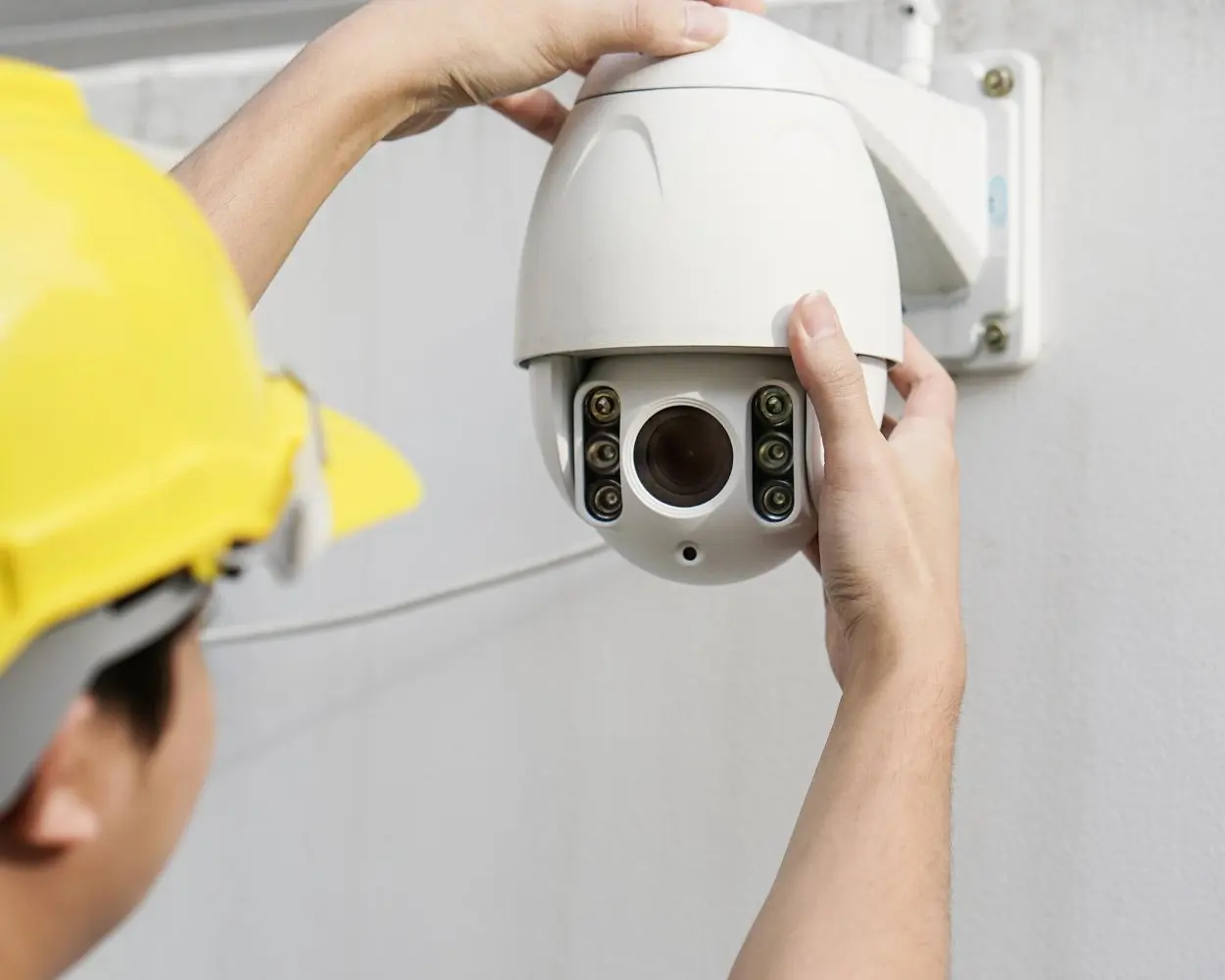
Map the essential coverage first
Cover the routes an intruder, visitor or vehicle must use, then consider less likely alternatives. External doors, shutters and accessible windows deserve attention, but camera positions should also respect privacy and avoid capturing neighbouring property unnecessarily. Inside, focus on areas where footage supports a clear security or operational need.
A reception camera may need a close view of faces at a counter rather than a general view of the ceiling and waiting area. A loading bay may require one camera for the door and another for the approach, depending on obstruction and distance. Record the intended result beside every marker on your plan.
Entrances and exits
Include normal staff routes, visitor doors, fire exits that could be misused and delivery openings, with privacy and safety considered.
Assets and work areas
Prioritise valuable stock, tools, IT equipment, tills and processes where an independent video record would resolve a real problem.
Vehicle movements
Consider approaches, turning areas, gates and parking separately. A camera inside a building cannot substitute for an obstructed outdoor view.
Allow for obstructions and changes in level
Racking, machinery, partitions and parked vehicles create blind spots that a plan view can hide. Walk the route at the intended camera height and check what is visible during normal operations. Stock that reaches a different height or a newly parked trailer can alter the view substantially.
Mounting height involves a compromise. Higher positions can see over obstacles and reduce tampering, but may show mainly the tops of heads. Lower positions can capture faces more effectively but need suitable protection. Corners sometimes reduce the number of cameras by covering two approaches, provided neither view becomes too wide.
Outdoors, check foliage, seasonal growth, uneven ground and the movement of large vehicles. A multi-sensor or panoramic camera may cover a broad junction, while two conventional cameras facing opposite directions can provide clearer detail along separate lanes.
Avoid unnecessary overlap without leaving gaps
Some overlap is valuable because it lets an investigator follow movement from one view to the next and preserves a record if one camera is obstructed. Repeated coverage of the same blank wall or quiet corridor is less useful. Review the plan as a sequence of journeys rather than isolated pictures.
Do not point a PTZ camera at a critical entrance as a substitute for fixed coverage. Its position at the time of an incident cannot be guaranteed. Likewise, relying on digital zoom from a very wide view can produce a soft image, even when the camera has a high headline resolution.
Once essential views are agreed, mark desirable additions separately. This allows the first phase to protect priority areas while leaving capacity and cable routes for future work. Expansion should include recorder channels, storage, switch capacity and power, not just spare mounting points.
- Keep a written purpose for every proposed camera.
- Review each view at the busiest and darkest relevant time.
- Include recording and network capacity in expansion plans.
- Remove views that do not support a defined security or operational task.
Turn the plan into a testable installation
A professional proposal should show camera locations and the expected field of view, supported by equipment and lens details. Ask the installer to explain any position that seems duplicated and any opening left without coverage. This discussion is more useful than comparing two quotes solely by camera count.
At commissioning, inspect live and recorded images from every position. Test the view with people and vehicles where they normally move, then repeat important checks after dark. Keep the accepted camera schedule with your handover documents so later changes to racking, fencing or lighting can be assessed against it.
FAQs
How many CCTV cameras?: frequently asked questions
Is there a standard camera count for a small business?
No. The number of entrances, required views, layout and external areas matters more than business size. A site survey turns those requirements into a reliable count.
Can a wide-angle camera reduce the total needed?
Sometimes, but wider coverage spreads available pixels across more of the scene. Check that distant people and objects remain clear enough for the intended purpose.
Should I buy extra recorder channels for later?
If expansion is likely, spare channels and suitable storage and network capacity can help. Agree the intended growth before choosing the recorder.
Further reading
Related commercial security guides
CCTV camera types explained
Understand dome, bullet, PTZ, panoramic, thermal and number plate cameras, and where each format fits a commercial site.
Read the guideWarehouse CCTV placement
Plan warehouse camera views around doors, docks, aisles, yards and processes while accounting for racking, vehicles and lighting.
Read the guideBusiness CCTV cost
See what small, medium and larger commercial CCTV systems typically cost, and why camera count alone is not a useful comparison.
Read the guide
Sources
External references used for this guide
Want a camera count based on your actual layout?
Arrange a free site inspection and receive a design that explains the purpose of every proposed camera.
Free site inspection
Request a CCTV coverage plan
Tell us your premises type, main entrances and any areas where you currently have blind spots or repeated incidents.
Or email info@msmesecurity.co.uk
- Monday to Friday: 9am to 6pm
- Saturday and Sunday: 11am to 5pm