
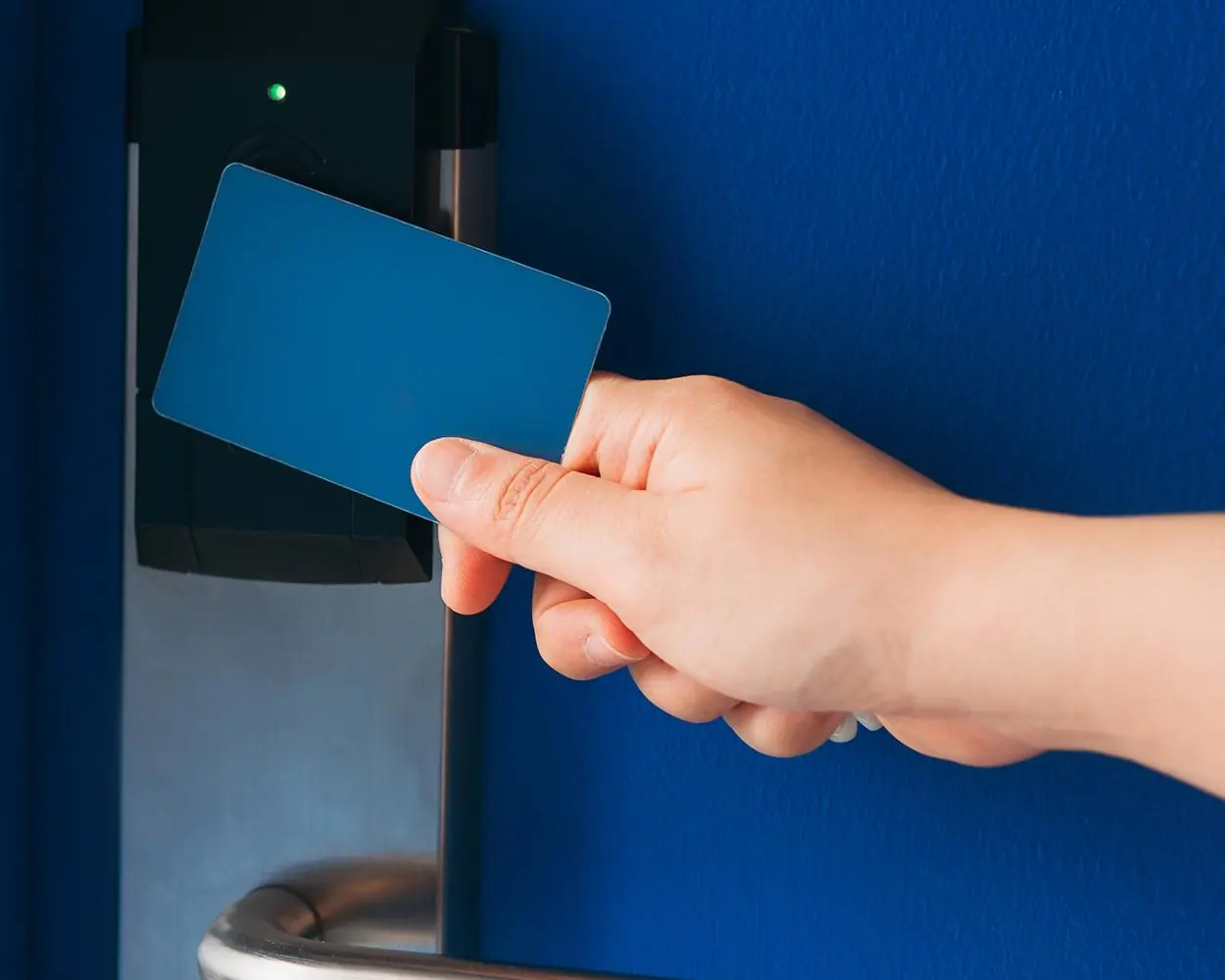
Door security guide
Electric strike vs maglock: choosing an electronic door lock
The reader decides who may enter, but the lock holds the door. Select locking hardware around the leaf, frame, traffic and safe escape rather than preference alone.
- Free site inspection and quotation
- Engineer led, no salespeople
- No callout charges for 3 months after installation
Before you buy
Two locks secure a door in different ways
An electric strike replaces or modifies the strike plate in the door frame and works with the door's latch. An electromagnetic lock, often called a maglock, uses an electromagnet on the frame and an armature plate on the door to hold it closed while energised.
Both can be controlled by an access control system, but their mechanical behaviour, installation and failure modes differ. The terms fail safe and fail secure describe what happens on power loss, and the required outcome depends on the door's function. Never choose solely from a generic rule about which is more secure.
Doors on escape routes and fire-rated doors need particular care. Electronic locking must be coordinated with the fire strategy, with suitable exit arrangements and any required alarm interface. A lock should never be fitted in a way that traps occupants or compromises the door assembly.
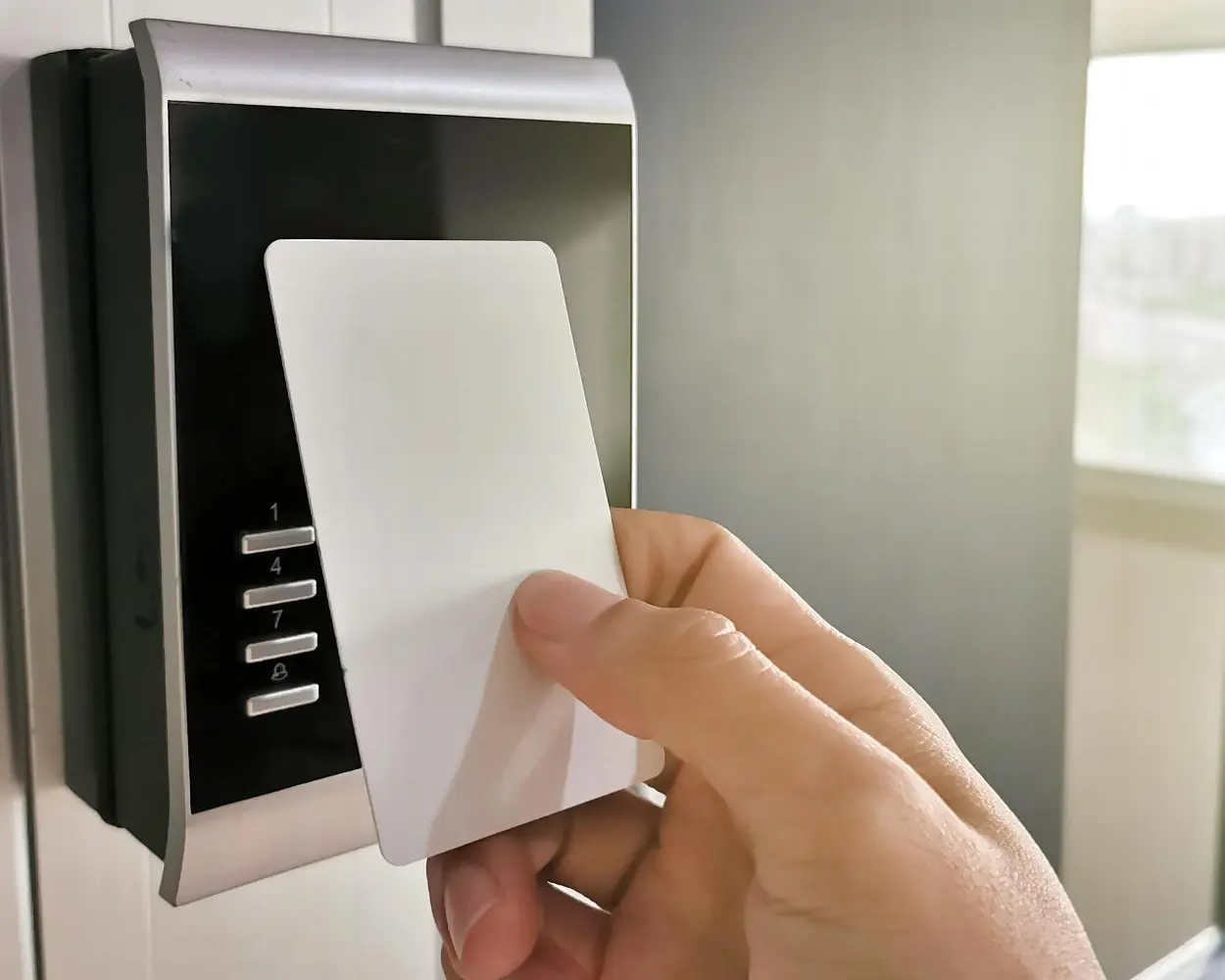
How an electric strike behaves
The mechanical latch remains part of the door's normal operation. When authorised, the electric strike changes state so the latch can be released and the door opened. Depending on the hardware and configuration, the handle or mechanical key may still provide a defined way to operate the door.
Correct alignment between latch and strike is essential. A sagging leaf, loose hinges, frame movement or a poorly adjusted closer can prevent reliable locking or release. The door and frame need to be repaired before electronic faults are diagnosed.
Electric strikes are available in different designs and duty levels. External, fire-rated and high-traffic doors need equipment intended for that application. The quote should identify the lock and any associated mechanical hardware rather than stating only electric locking.
Uses the existing latch concept
Works with compatible latch and door hardware, making alignment and the condition of the complete assembly important.
Configuration matters
Power-loss and mechanical operation vary by product and setup, so confirm entry and escape behaviour for the actual door.
How a maglock behaves
A maglock has no conventional latch engaging a strike. When energised and correctly aligned, the magnet and armature create the holding force. The mounting surface, bracket, door and frame must be sound enough for the selected unit.
Because holding depends on electrical power and control, the design needs suitable exit devices, power arrangements and any fire alarm interface. A request-to-exit button, door contact and other components may form part of the system, but their exact design must suit the door and escape risk assessment.
Armature alignment and clean contact surfaces affect operation. Repeated slamming, a twisted door or loose bracket can cause faults. Users should never tie, wedge or bypass a maglock because the normal exit arrangement is inconvenient.
Compare the door, not only the lock datasheet
Start with whether the leaf and frame are timber, metal, glass or another construction, then note single or double action, existing latch, closer, traffic and exposure. Some doors need specialist brackets or a different locking approach entirely. Double doors and emergency exits require additional assessment.
Consider everyday use. A door opened hundreds of times needs suitable duty and a closer that controls it properly. An external door needs weather-resistant equipment and protected cabling. Noise, holding force and appearance may matter, but none should override mechanical reliability and safe escape.
Power-loss behaviour should be decided from the security and fire requirements of that opening. One part of a building may need to remain secure while another must release. Document the result and test it during commissioning and maintenance.
- Inspect the leaf, frame, hinges, latch and closer before selecting hardware.
- Confirm whether the door is fire-rated or forms part of an escape route.
- Specify normal exit and power-failure behaviour explicitly.
- Include brackets, power supplies, door contacts and making good in the scope.
Why professional design and testing matter
Access control combines mechanical and electrical work with life-safety considerations. Components from different manufacturers must be compatible as a complete assembly. A lock that performs correctly on a bench may fail on a misaligned or heavily used door.
At handover, test authorised entry, normal exit, door closing, power loss and any fire alarm interface according to the agreed design. Provide user instructions and a maintenance schedule. If the door later sticks, slams or fails to close, arrange repair rather than increasing force or bypassing a safety feature.
FAQs
Electric strike vs maglock: frequently asked questions
Is a maglock more secure than an electric strike?
There is no universal winner. Door and frame strength, mounting, traffic, attack risks and the complete locking design determine performance.
Does a maglock always release when power fails?
Its holding depends on power, but safe escape involves the complete control and exit arrangement. The door's fire strategy must guide the design.
Can an electric strike fix a badly aligned door?
No. The hinges, leaf, frame, latch and closer should be repaired so the mechanical door works before electronic locking is assessed.
Further reading
Related commercial security guides
Choosing access control
Choose around your doors, users and daily administration, with practical guidance on credentials, fire safety, integration and growth.
Read the guideKey fob door entry systems
How commercial fob entry works, how to manage credentials and what to check across doors, users, software and escape routes.
Read the guideAccess control maintenance
Check readers, locks, doors, controllers, users, backups and emergency operation as one complete access control maintenance routine.
Read the guide
Sources
External references used for this guide
Not sure which lock your controlled door needs?
Have an engineer inspect the complete door assembly and escape requirements before selecting an electric strike or maglock.
Free site inspection
Arrange an electronic door assessment
Tell us the door material, approximate traffic, existing lock and whether it is a fire door or on an escape route.
Or email info@msmesecurity.co.uk
- Monday to Friday: 9am to 6pm
- Saturday and Sunday: 11am to 5pm