
Access control decision guide
Biometric access control: pros, cons and data responsibilities
Biometrics can link entry to a person's physical characteristics, but stronger identity assurance brings additional operational and data protection responsibilities.
- Free site inspection and quotation
- Engineer led, no salespeople
- No callout charges for 3 months after installation
Before you buy
Start by proving why biometrics are necessary
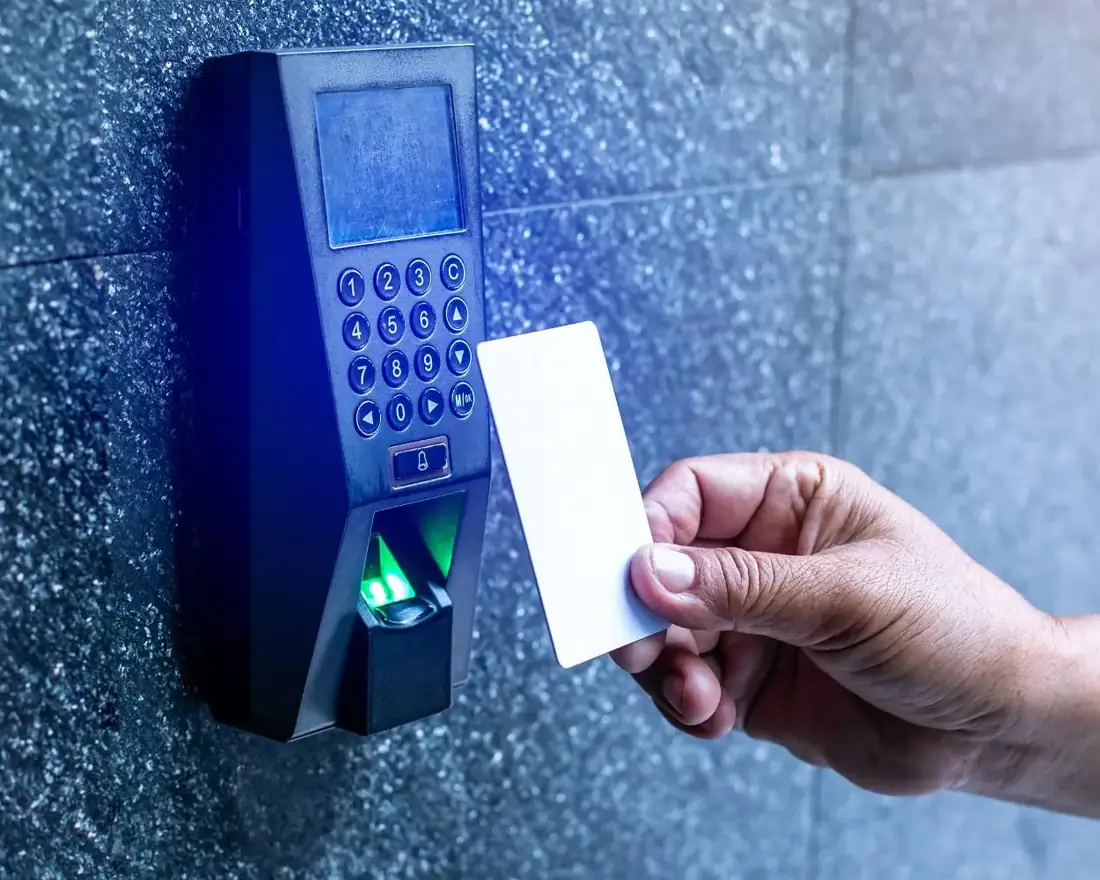
Biometric access control uses characteristics such as a fingerprint, face or iris in a technical process that allows or confirms a person's identity. A reader compares the presented characteristic with enrolled information and the access system applies the person's permissions if there is an accepted match.
Unlike a replacement card or password, a person cannot simply be issued with a new fingerprint or face. Biometric information used for unique identification can be special category data under UK data protection law. Its use therefore needs careful justification, security and governance.
The first question is not which reader to buy. It is why a card, fob, mobile credential or another less intrusive method would not achieve the required result. Document the problem, the people affected and the alternatives considered before selecting the technology.
Speak to the people who will use the readers before committing. Their concerns and practical difficulties can reveal whether a card or fob would achieve the same result.
Potential operational benefits
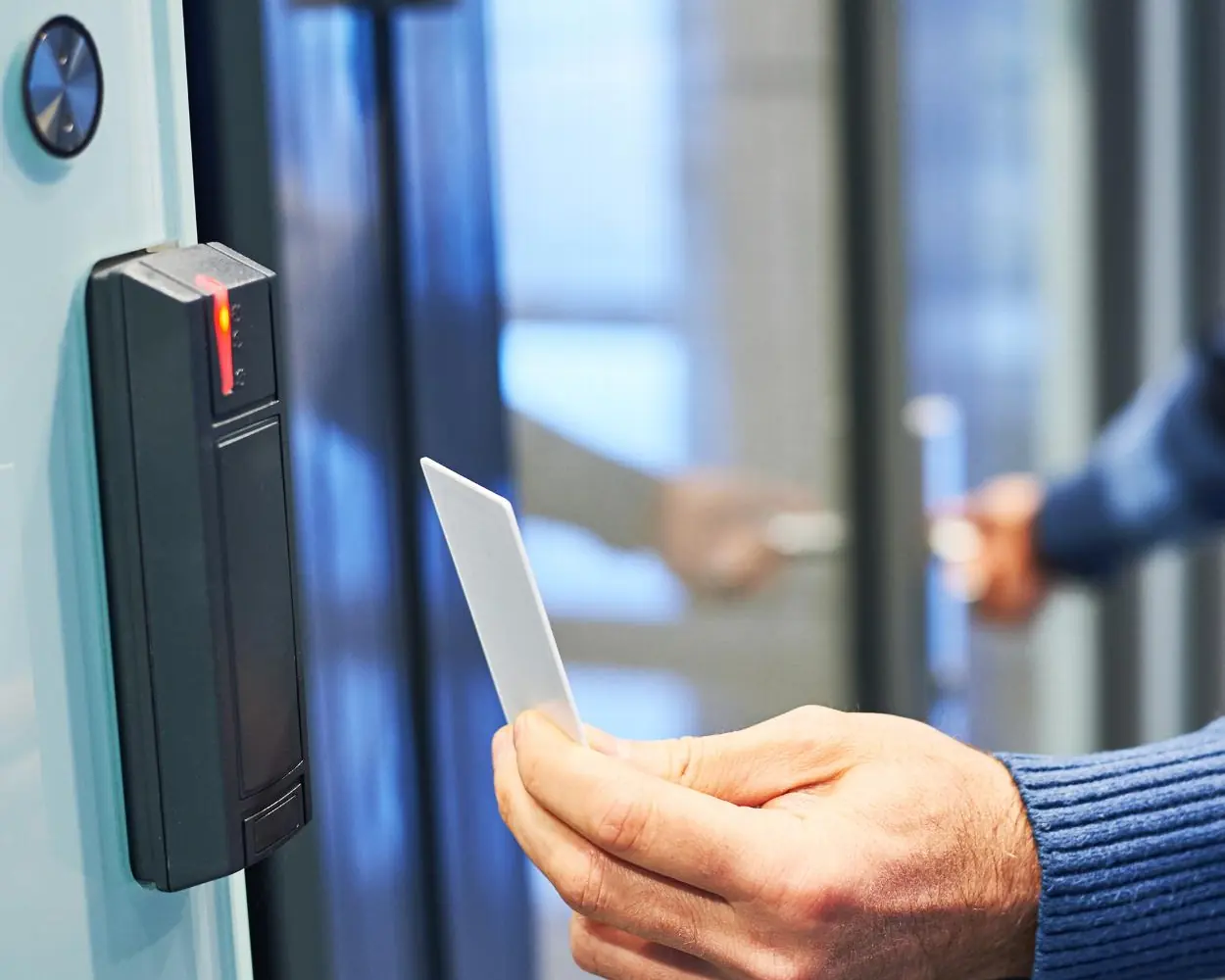
A biometric credential is presented by the person rather than carried as a separate card. This can reduce shared credentials and the routine replacement of lost fobs. In a restricted area where confirming identity matters, biometrics may support a stronger check than a card alone.
Some systems combine a biometric with a card or PIN for an additional authentication step. Whether this is proportionate depends on the risk. Adding it to every low-risk internal door can create unnecessary enrolment and administration without a meaningful security benefit.
Biometric systems can also be linked to time and attendance functions, but this introduces a separate purpose that must be assessed and explained. A door-entry deployment should not quietly become a wider worker-monitoring system without appropriate review.
Identity-linked entry
Can reduce the risk of one person lending a credential to another where the system and enrolment process are properly controlled.
No separate card to carry
May reduce card handling, although users still need enrolment, support and an alternative when the biometric cannot be used.
Practical limitations and user experience
No biometric reader accepts every presentation perfectly. Dirty sensors, worn fingerprints, injuries, gloves, lighting or individual physical differences can affect usability depending on the technology. Test with the actual workforce and environment rather than relying on a demonstration.
Provide a fair, workable alternative for people who cannot or do not use the biometric. Consider accessibility, religious or cultural concerns and how visitors and temporary workers will enter. A process that consistently sends one group to reception can create delay and resentment.
Enrolment and removal require trained administrators. Staff joining, changing roles or leaving need their permissions and biometric records handled promptly. Cleaning and maintenance also matter at frequently touched readers.
Data protection and security responsibilities
The ICO says organisations using biometric data for worker access need to consider lawful basis, a valid special category condition, necessity and proportionality. A data protection impact assessment may be required for likely high-risk processing. Obtain current specialist advice for the proposed arrangement rather than assuming employee consent is automatically valid.
Explain clearly what is collected, why, how it is used, who can access it and how long it is retained. Establish the relevant provider and controller responsibilities, including where data is hosted and what happens if the contract ends. ICO guidance is being reviewed following recent legislative changes, so check the current position before implementation.
Apply appropriate technical and organisational security. Limit administrator access, protect backups and retention, and understand whether the system stores images, templates or other identifiers. The detailed arrangement varies by product, but the organisation remains responsible for assessing it.
- Document why biometric processing is necessary and proportionate.
- Offer and assess a suitable non-biometric alternative.
- Complete required data protection assessment before deployment.
- Plan secure deletion, provider exit and removal of leavers.
Use biometrics selectively
A mixed system may reserve biometric readers for a small number of higher-risk doors while cards or fobs serve general areas. This limits the amount of sensitive processing and keeps everyday administration simpler. Door hardware, escape arrangements and network security still need the same careful design.
Before committing, run a structured evaluation covering security outcome, user acceptance, failure handling, data governance and lifetime support. Include representatives responsible for facilities, IT, HR and data protection where relevant. The best system is one the organisation can justify and administer responsibly, not the one with the most impressive reader.
FAQs
Biometric access control: frequently asked questions
Are fingerprint door entry systems legal in the UK?
They can be used only where the organisation meets applicable data protection requirements, including a lawful basis and relevant conditions for biometric processing.
Do employees have to use a biometric reader?
The organisation must assess necessity, proportionality and workers' rights, and provide appropriate arrangements. Obtain current advice rather than relying on assumed consent.
Are biometrics always more secure than cards?
Not automatically. Enrolment, reader configuration, door hardware, administration and data security all affect the result, and cards may be sufficient for many doors.
Further reading
Related commercial security guides
Choosing access control
Choose around your doors, users and daily administration, with practical guidance on credentials, fire safety, integration and growth.
Read the guideKey fob door entry systems
How commercial fob entry works, how to manage credentials and what to check across doors, users, software and escape routes.
Read the guideAccess control maintenance
Check readers, locks, doors, controllers, users, backups and emergency operation as one complete access control maintenance routine.
Read the guide
Sources
External references used for this guide
Considering biometric entry for a restricted area?
Discuss the door, user and security requirements with an engineer, including whether cards or fobs would provide a simpler answer.
Free site inspection
Arrange an access control consultation
Tell us which areas need stronger identity checks, how many people use them and whether any access system is already installed.
Or email info@msmesecurity.co.uk
- Monday to Friday: 9am to 6pm
- Saturday and Sunday: 11am to 5pm