
Business access management
Access control and fire alarm integration: planning door release
An access-controlled door must support the building’s escape strategy as well as its security needs. Agree how people leave before deciding how the lock is powered.
- Free site inspection and quotation
- Engineer led, no salespeople
- No callout charges for 3 months after installation
Before you buy
Treat the door as part of the escape route
Fire alarm integration is not simply a cable between two control panels. It is an agreed sequence describing how relevant doors behave during an alarm, a fault and a power interruption. That sequence should follow the fire risk assessment and escape strategy for the particular premises.
The correct arrangement depends on occupancy, door hardware, escape direction and how people are expected to leave. Some electrically secured doors need an alarm interface; others provide suitable mechanical escape independently of the access system. Avoid assuming that every door must unlock in the same way.
Involve the people responsible for fire safety, access control and door hardware early. Existing fire doors may have requirements for closing and latching that must remain effective. Work on locks, wiring or release devices should not undermine the performance of the complete door assembly.

Understand fail safe and fail secure precisely
A fail safe electric lock releases when its locking power is removed. A fail secure lock remains secure from its controlled side when power is lost. These terms describe a particular electrical behaviour, not a complete judgement that a door is safe or unsafe for evacuation in every situation.
A fail secure electric strike can be paired with hardware that allows mechanical escape from inside, depending on the assembly. Conversely, a fail safe lock still needs an appropriate means of removing power and a door that opens readily. Assess the whole escape operation, including handles, latches and any additional locking points.
Write down which alarm events release which doors
Prepare a door schedule showing each controlled opening, its purpose and the required alarm response. State whether release follows a general fire signal or another agreed cause and effect. The responsible fire safety parties should approve this logic rather than leaving an installer to infer it from room names.
The interface needs to operate reliably under the conditions identified by the design. Ask how cable faults, loss of a supply and controller failure are handled, and whether the release path depends on software or a network. A convenient screen command should not be assumed equivalent to an appropriate emergency release arrangement.
Distinguish emergency release from routine exit controls
A normal request-to-exit button or movement sensor is used during everyday operation. An emergency door release device, often a green break-glass unit or a resettable equivalent, has a different purpose. Where required by the design, it provides a local way to release electrical locking independently of ordinary access decisions.
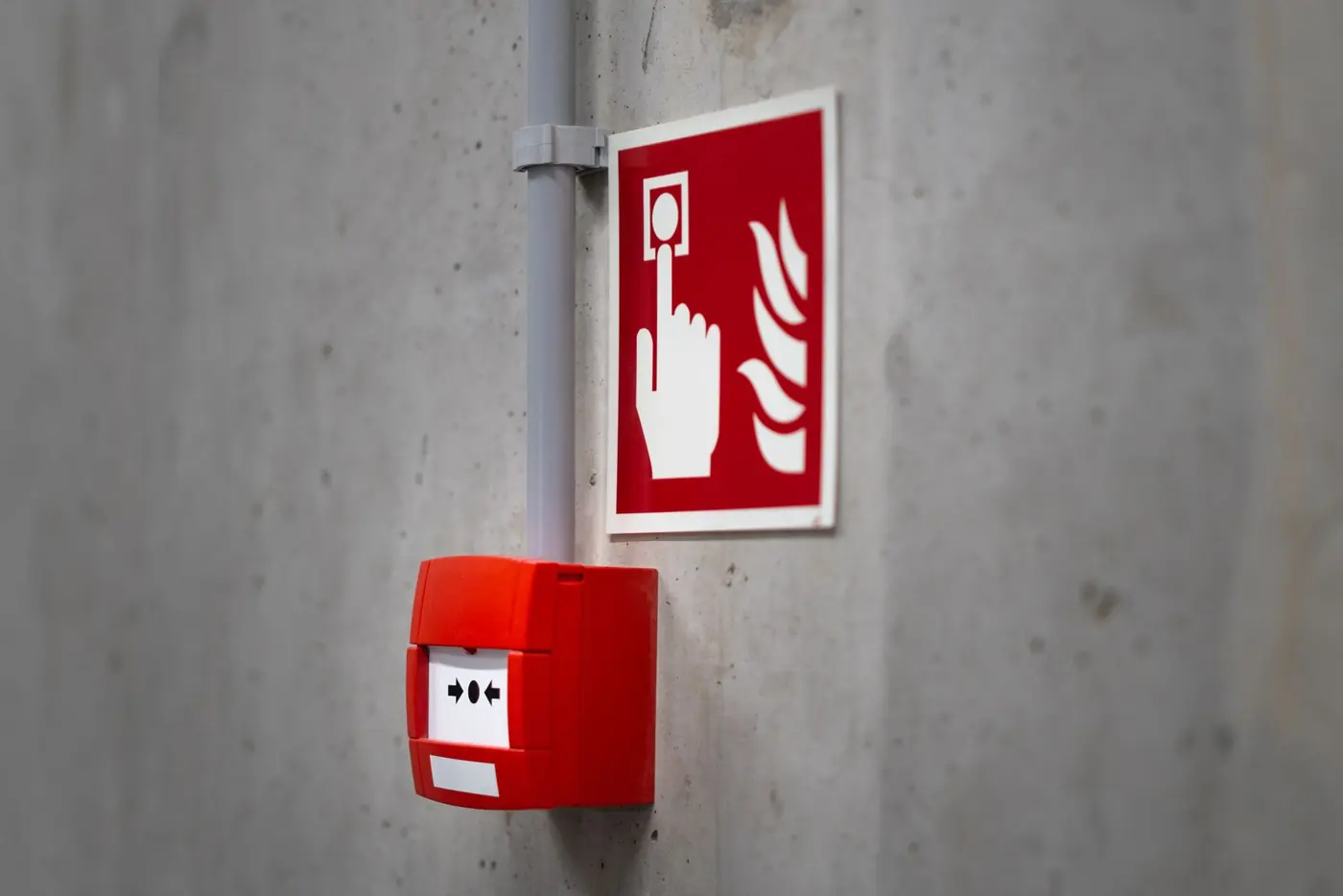
Its position, labelling and method of operation should suit the escape route and users. Do not confuse a green door release unit with a red fire alarm call point. Clarify what each device operates and whether a broken or activated release produces a fault or security notification for the responsible team.
Coordinate locks with closing and compartmentation
Unlocking a door is not the same as holding it open. A fire door may need to close and latch to restrict smoke and fire spread even while people can escape through it. Powered operators and hold-open equipment require their own coordinated response, appropriate to the fire strategy and installed hardware.
Check that seals, closers and door alignment are not preventing easy escape after electrical release. A door can receive the correct signal yet remain difficult to open because of a binding latch or pressure difference. Test the physical action with the relevant team rather than accepting an indicator light as proof of performance.
Use standards as part of a competent design
UK fire safety duties depend on the premises and jurisdiction. Government guidance and the fire risk assessment inform the required precautions. Standards such as BS 7273-4 may be relevant to electrically controlled door release, but applicability, current editions and the appropriate arrangements should be confirmed by competent specialists for the specific building.
Avoid copying a diagram from another site or quoting a supposed universal release rule. The interaction between electrical locking, escape hardware and fire door performance needs coordinated review. Record any assumptions, unusual occupancy conditions and responsibilities so later changes do not silently invalidate the basis on which the arrangement was accepted.
Test the agreed sequence after changes
Handover should demonstrate the required response at each relevant door, including local emergency release and the agreed alarm interface. Coordinate tests so occupants understand what is happening and security is maintained. Record results, defects and corrective actions, then confirm normal locking and fire alarm operation have been properly restored.
Revisit the schedule when a lock, access controller, alarm interface or power supply changes. Establish who resets emergency devices and authorises a return to service after activation. Routine maintenance should follow the applicable guidance and manufacturer instructions, with combined testing arranged where separate contractors would otherwise inspect only their own equipment.
FAQs
Access control and fire alarms: frequently asked questions
Must every access-controlled door unlock on a fire alarm?
There is no safe universal answer for every door and premises. Required behaviour follows the escape strategy, fire risk assessment and hardware arrangement. Some doors provide suitable mechanical escape without needing the external access function to unlock.
Is a request-to-exit button an emergency break glass?
Not usually. A routine exit control and a dedicated emergency door release serve different functions. The required devices and wiring depend on the design, and their operation should be clearly identified and tested.
Can we keep an external door secure during evacuation?
Possibly, where the complete door arrangement permits the required escape without preventing necessary access or conflicting with the fire strategy. Have competent specialists assess both directions of travel and any emergency services requirements before specifying the lock.
Further reading
Related commercial security guides
Business video intercoms
A video intercom can help staff assess a caller before opening an entrance. The useful question is how that conversation becomes a safe, consistent visitor decision.
Read the guideElectric strike vs maglock
Understand how electric strikes and electromagnetic locks work, and why door construction and escape requirements drive the choice.
Read the guideAccess control maintenance
Check readers, locks, doors, controllers, users, backups and emergency operation as one complete access control maintenance routine.
Read the guide
Sources
External references used for this guide
Review the complete door release sequence
MSME Security installs and maintains commercial fire alarms and access control. Arrange a free site inspection and consultation to discuss your doors, existing interfaces and coordination needs.
Free site inspection
Discuss fire alarm and access interfaces
Tell us about your premises, electrically locked doors and available fire risk assessment information. Identify any changes to occupancy, door hardware or the alarm system.
Or email info@msmesecurity.co.uk
- Monday to Friday: 9am to 6pm
- Saturday and Sunday: 11am to 5pm