
Commercial alarm planning
Fire alarm log book and weekly tests: a workplace guide
A fire alarm log book turns routine checks and unexpected events into an accountable record. Weekly user tests support that record, but they do not replace competent servicing or a suitable fire risk assessment.
- Free site inspection and quotation
- Engineer led, no salespeople
- No callout charges for 3 months after installation
Before you buy
Make fire alarm checks an organised routine
Government fire safety guidance for workplaces explains the need to maintain fire precautions and keep appropriate records. In England and Wales, duties under the Regulatory Reform Fire Safety Order sit with the responsible person and others to the extent of their control. Scotland and Northern Ireland have different legal frameworks, so check the rules applicable to the premises.
A responsible person can arrange for trained staff or competent contractors to carry out tasks, but should not assume that appointing someone removes the need to manage those arrangements. Clear instructions, cover for absence and a route for reporting defects make routine tests more dependable than an informal reminder passed between shifts.
This guide focuses on the weekly user test and the associated log book. It does not provide engineering instructions for repairing panels, changing programming or proving every aspect of system performance. Follow the installed system's instructions and obtain competent advice where the procedure or a panel indication is unclear.
Prepare before operating a call point
Choose a regular time and tell occupants what to expect, while preserving the rule that an unexpected alarm requires the emergency response. Consider visitors, shift workers and anyone using supplementary warning equipment. The person conducting the test should understand the normal panel state, the approved operating method and the procedure for restoring the system afterwards.
If the alarm is monitored or connected to other building functions, coordinate the test through the agreed process before operation. Establish which outputs need controlled arrangements and who is authorised to manage them. Never assume that putting a receiving centre on notice automatically manages door releases, plant shutdowns or other interfaces. Any temporary measures need a clear restoration check at the end.
Use a different call point in rotation
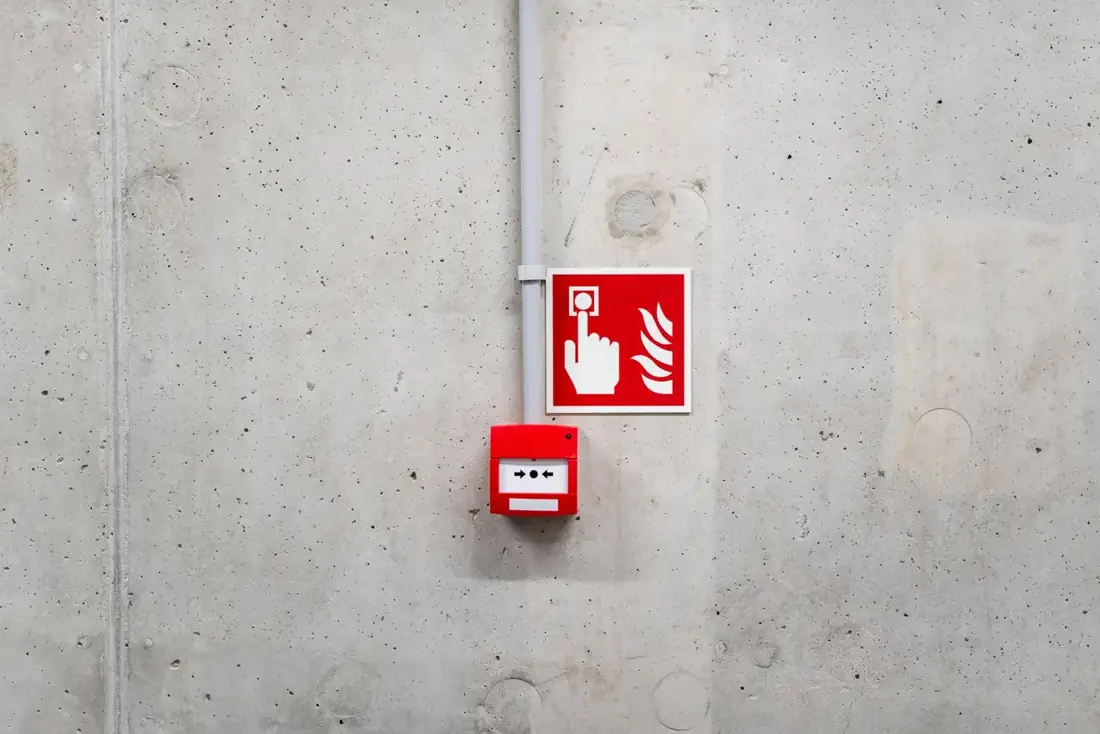
Weekly user testing normally involves operating a manual call point to check that the alarm operates, using a different point in rotation so the same convenient device is not always selected. Follow the applicable guidance, system instructions and agreed procedure. Record the exact call point used so that the sequence can be checked rather than reconstructed from memory months later.
Keep the alarm sounding only as required for the controlled test and relevant instructions; government workplace guidance describes a short weekly test. Check that the expected indication appears and note obvious failures in the areas observed. This routine exercise is not a full audibility survey, a detector test programme or proof that every interface and warning device has been examined that week.
Restore normal service and act on defects
After operating the call point, restore the device and reset the system using the authorised procedure. Check that the panel returns to its normal state and that temporary arrangements made for the test have been removed. Confirm normal service with the monitoring provider where required. A completed test should not leave a transmission path isolated or a building function in test mode.
If the alarm fails to operate or the panel shows a fault, record it and notify the responsible manager or maintainer promptly. Assess the effect on protection and obtain competent advice about interim measures. Do not treat repeated resets as a repair. Where part of the system is unavailable, the people controlling the premises need to understand the limitation and manage it until restoration is confirmed.
Record more than a tick and a signature
The log should identify the date, time, person conducting the test, call point location, result and any action needed. Include faults, false alarms, disablements, maintenance visits and significant changes in the wider system record. Clear entries help the maintainer see patterns and help managers distinguish an unresolved defect from an issue that has already been investigated and closed.
Keep records accurate and available to the people who need them. Paper and suitable electronic arrangements can both support the process, provided information is accessible, retained appropriately and protected against accidental loss or unexplained alteration. Store relevant certificates, drawings and operating instructions alongside or with a clear link to the log. A weekly entry is more useful when the equipment and actions can be identified reliably.
Manage the schedule and review the evidence
Assign responsibility for the weekly task and nominate trained cover for leave or shift changes. Review missed tests rather than silently filling gaps later. Periodically check whether the rotation is progressing and whether faults have been closed out. Managers do not need to perform every test personally, but they should have a practical way to confirm that the agreed routine is happening.
Keep competent inspection and servicing on a separate planned schedule appropriate to the system and relevant guidance. Use the log to brief the engineer about recent problems and retain the resulting service information. Revisit arrangements when premises become temporarily vacant, staffing changes or monitoring is altered. The record should describe actual management of the alarm, not merely provide a neat document with no connection to its current condition.
FAQs
Fire alarm log book and tests: frequently asked questions
Does a weekly call point test replace servicing?
No. It is a routine user check with a limited purpose. Competent inspection and servicing remain necessary, and the log should record those visits and any resulting work separately from the weekly tests.
Should the same call point be used every week?
Normally a different call point is used in rotation under the agreed procedure. Recording its location helps demonstrate the sequence and avoids repeatedly testing only the device nearest the control panel.
Must the log book be on paper?
An appropriate electronic record may be suitable if it is accurate, accessible and managed reliably. Choose an arrangement that staff can maintain and that makes relevant information available when required by those managing fire safety.
Further reading
Related commercial security guides
Fire alarm categories
A fire alarm category describes a protection objective and its coverage. Choose it through the fire risk assessment and competent design, not by assuming that every commercial building needs the same arrangement.
Read the guideWireless fire alarms
Wireless fire alarms replace some signal cabling with radio communication. Their suitability depends on a surveyed radio design, appropriate equipment and a maintenance plan that treats batteries as managed safety components.
Read the guideReduce false fire alarms
Repeated unwanted fire alarms disrupt work and can weaken trust in the warning system. Reduce them through investigation and controlled improvements, never by encouraging staff to ignore signals or leave detection disabled.
Read the guide
Sources
External references used for this guide
Put a reliable alarm test routine in place
Arrange a free site inspection and consultation with MSME Security to discuss commercial fire alarm maintenance needs and the practical information your team needs to manage routine checks.
Free site inspection
Discuss fire alarm testing records
Tell us how tests are organised, where records are kept and whether faults remain unresolved. Include the panel details if available, but do not send confidential access codes with your enquiry.
Or email info@msmesecurity.co.uk
- Monday to Friday: 9am to 6pm
- Saturday and Sunday: 11am to 5pm