
Access control guide
Barrier access control options: keypad, fob, intercom, ANPR and ticketing
The barrier is only as useful as the way drivers open it. Choose controls that suit staff, visitors and deliveries without creating queues.
- Free site inspection and quotation
- Engineer led, no salespeople
- No callout charges for 3 months after installation
Before you buy
Different drivers need different ways in
Most sites have more than one type of driver. Staff arrive every day, regular contractors come and go, delivery drivers may visit once, and visitors expect a clear way to announce themselves. A single opening method rarely suits all of them, so the best barrier systems combine two or three.
When choosing, think about how many users you have, how often they change, whether the entrance is staffed and whether you need a record of who came in. The options below are listed roughly from the simplest to the most automated.

Budget guide
Typical UK guide figures for barrier controls
Approximate additions to an installed barrier, for budgeting only. Cabling distance and integration with existing systems affect the final figure.
- Keypad on a post
- £200 to £600
- Code entry for a small group of users, including a mounting post at driver height.
- Fob, card or remote transmitter reader
- £300 to £1,200
- Reader or receiver plus an initial batch of fobs, cards or remotes.
- Intercom, audio or video
- £500 to £2,000+
- Visitor call point linked to reception, a gatehouse or a phone, depending on connectivity.
- Number plate recognition per lane
- £2,000 to £4,000
- Camera, recognition software and authorised vehicle lists.
Typical UK guide figures excluding VAT, not MSME Security prices. Ticketing and pay systems vary greatly and are best priced against a specific requirement.
The main options compared
Each method has strengths and weaknesses. The right mix depends on the people using the entrance rather than the technology itself.
Keypad
Simple and inexpensive. Suits small teams, but codes get shared, so change them regularly and avoid keypads where you need to know exactly who entered.
Fob, card or remote
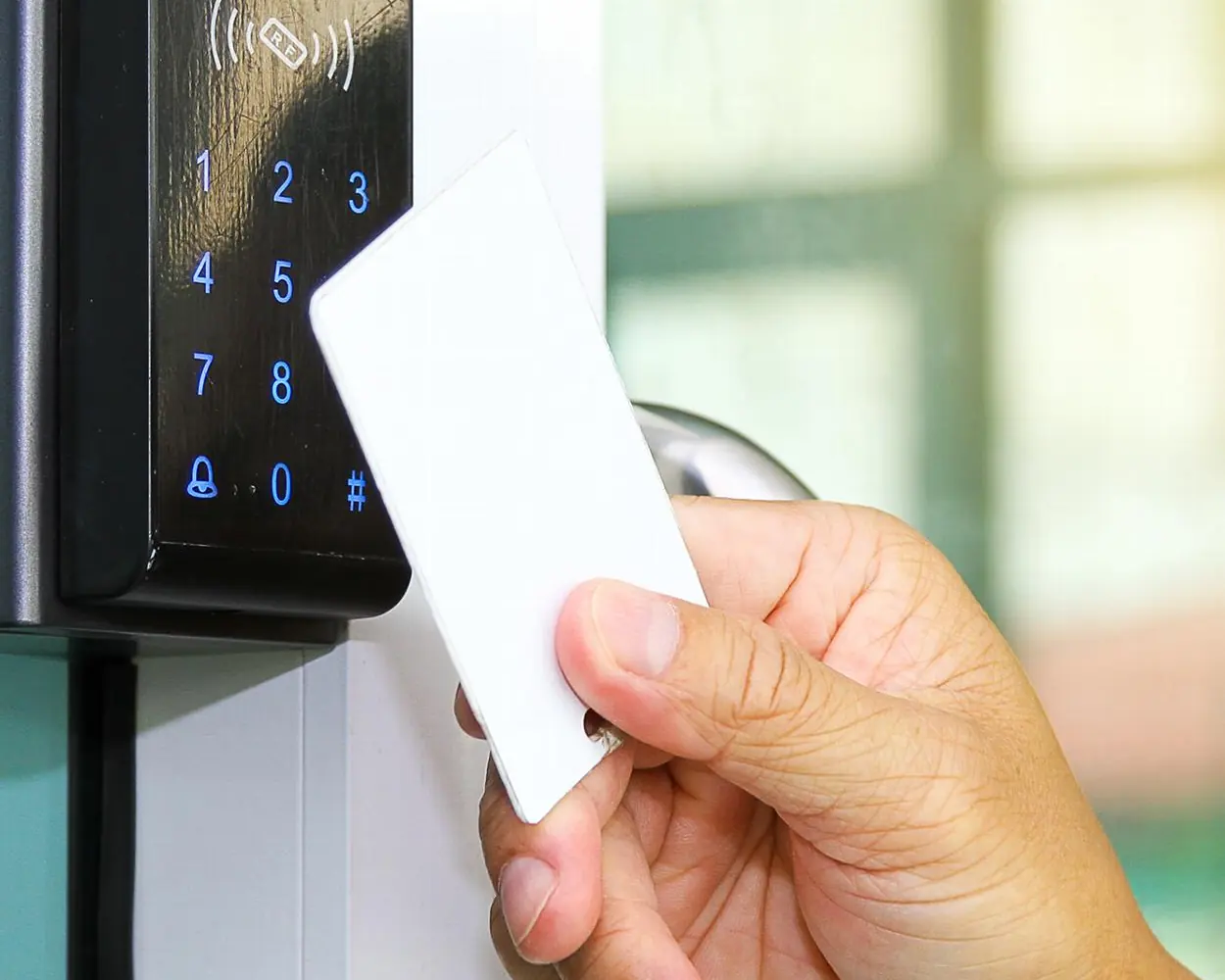
Each user has their own credential, which can be cancelled if lost. Cards and fobs can often work with the same system as your door access control.
Intercom
Gives visitors and delivery drivers a person to speak to. Video intercoms let staff see the vehicle before releasing the barrier. Someone must be responsible for answering.
Number plate recognition
The barrier opens for authorised vehicles without drivers presenting anything, and every arrival is logged. It needs a good camera position, lighting and a plan for unregistered plates.
Ticketing
Ticket machines suit public or pay car parks where drivers are not known in advance. They add hardware, payment handling and ongoing management.
Combining methods
A common arrangement is number plate recognition for staff and fleet vehicles, an intercom for visitors and hauliers, and a fob or keypad as a fallback when a plate is not read. Exit can often be free, using a vehicle detection loop, or controlled by a second reader where you need to record departures.
Think about the people who will manage the system as well as the drivers. A keypad needs someone to change and circulate codes. Fobs and cards need a process for issuing, recording and cancelling them when staff leave. Number plate lists need updating when vehicles change. Choosing a method your team can keep up to date matters as much as the hardware.
Integration matters. If your doors already use cards or fobs, the barrier can often share the same user list, so one person can manage access across the site. Linking number plate recognition with CCTV gives a recorded image of each vehicle at the entrance.
Practical points before you choose
Post-mounted readers and intercoms must sit within reach of a driver's window for cars, vans and HGVs, which can mean two heights on one post. Consider lighting for night use and whether a network connection or phone line is available at the barrier.
- List each type of driver and how they should be let in.
- Decide who manages the user list and how lost fobs are cancelled.
- Plan a fallback for power cuts, network faults and unread plates.
- Check whether the barrier can share your existing door access system.
FAQs
Barrier access control options: frequently asked questions
Can a barrier use the same fobs as our office doors?
Often, yes, if the reader is compatible with your access control system. That lets you manage door and vehicle access from one list of users.
What happens if number plate recognition fails to read a plate?
A well designed entrance keeps a second method available, such as an intercom, keypad or fob, so the driver can still be let in.
Do I need ticketing for a staff car park?
Usually not. Ticketing suits car parks used by the public. For known staff and visitors, fobs, number plate recognition and an intercom are normally simpler.
Further reading
Related commercial security guides
Car park barrier cost
Typical UK guide figures for automatic car park barriers, what pushes the price up or down, and what to budget for running and maintenance.
Read the guideAutomatic vs manual barriers
Compare automatic and manual barriers for car parks, factories and private roads, including cost, convenience, safety and security.
Read the guideBarrier servicing and maintenance
How often an automatic barrier should be serviced, what a service visit covers and the faults that most often stop barriers working.
Read the guideChoosing access control
Choose around your doors, users and daily administration, with practical guidance on credentials, fire safety, integration and growth.
Read the guide
Sources
External references used for this guide
Planning how drivers will get through your barrier?
We can design controls for staff, visitors and deliveries that work with your existing systems.
Free site inspection
Discuss barrier access control
Tell us who uses the entrance and any access control or CCTV already on site.
Or email info@msmesecurity.co.uk
- Monday to Friday: 9am to 6pm
- Saturday and Sunday: 11am to 5pm