
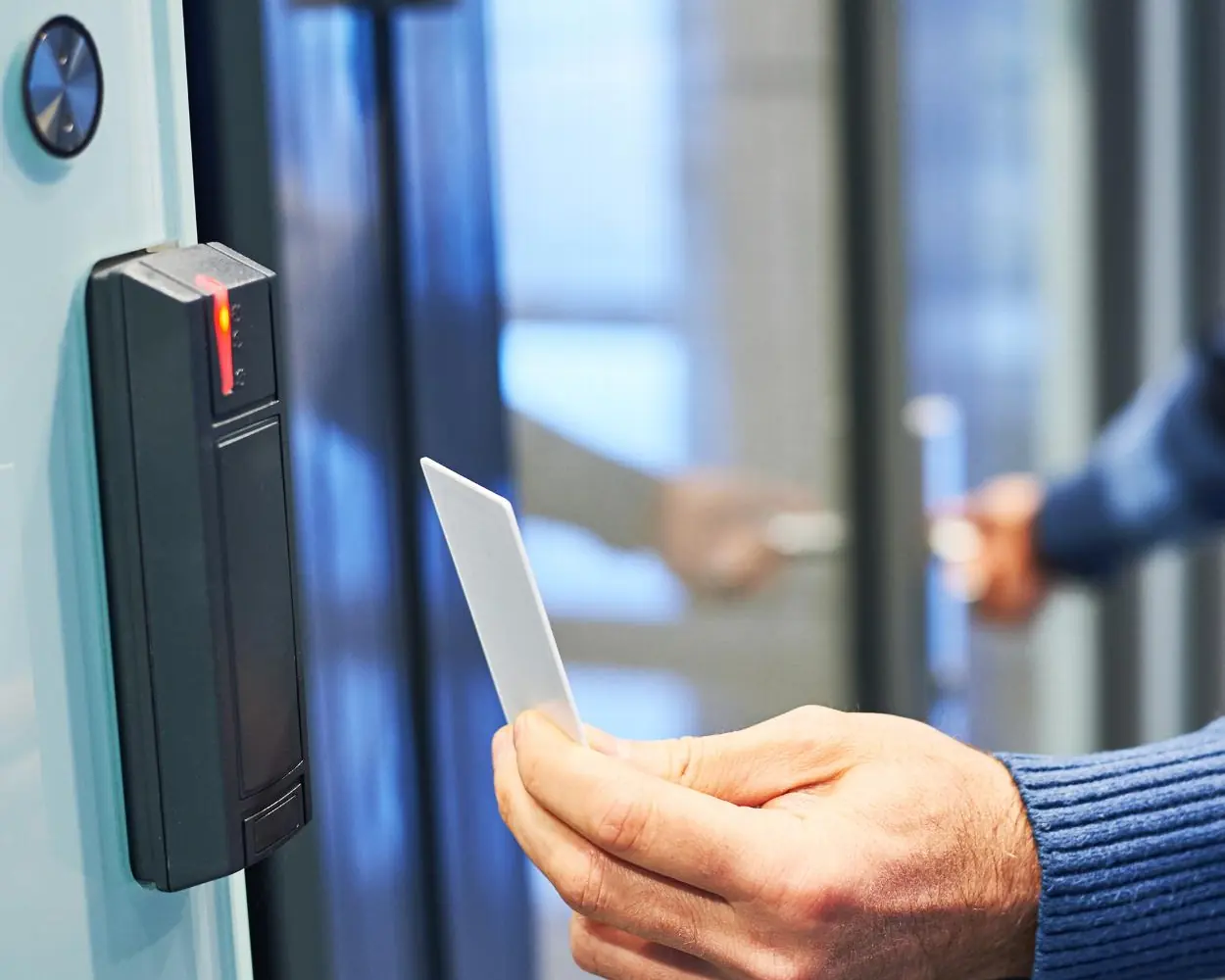
Office security review
Office building security checklist for facilities teams
Office security depends on everyday habits as well as door hardware. Follow the route from reception to sensitive rooms, then check how access changes during evenings, absences and contractor visits.
- Free site inspection and quotation
- Engineer led, no salespeople
- No callout charges for 3 months after installation
Before you buy
Follow an ordinary office day from arrival to closing
An office may appear controlled at the front entrance while offering easy access through a delivery door or shared stairwell. A practical checklist follows how staff, visitors and contractors actually move, including informal exceptions that have become part of the working day.
Use the checklist with facilities, reception, HR and IT rather than assigning every item to one department. These teams hold different parts of the picture, from staff departures to network cupboards and meeting room bookings. Name an owner for any issue that crosses between them.
Adjust the review for the building's layout and occupancy. A single company office and a multi-tenant building may share risks but have different authority over entrances and common areas. Record the landlord's responsibilities separately from the controls your organisation can change directly.
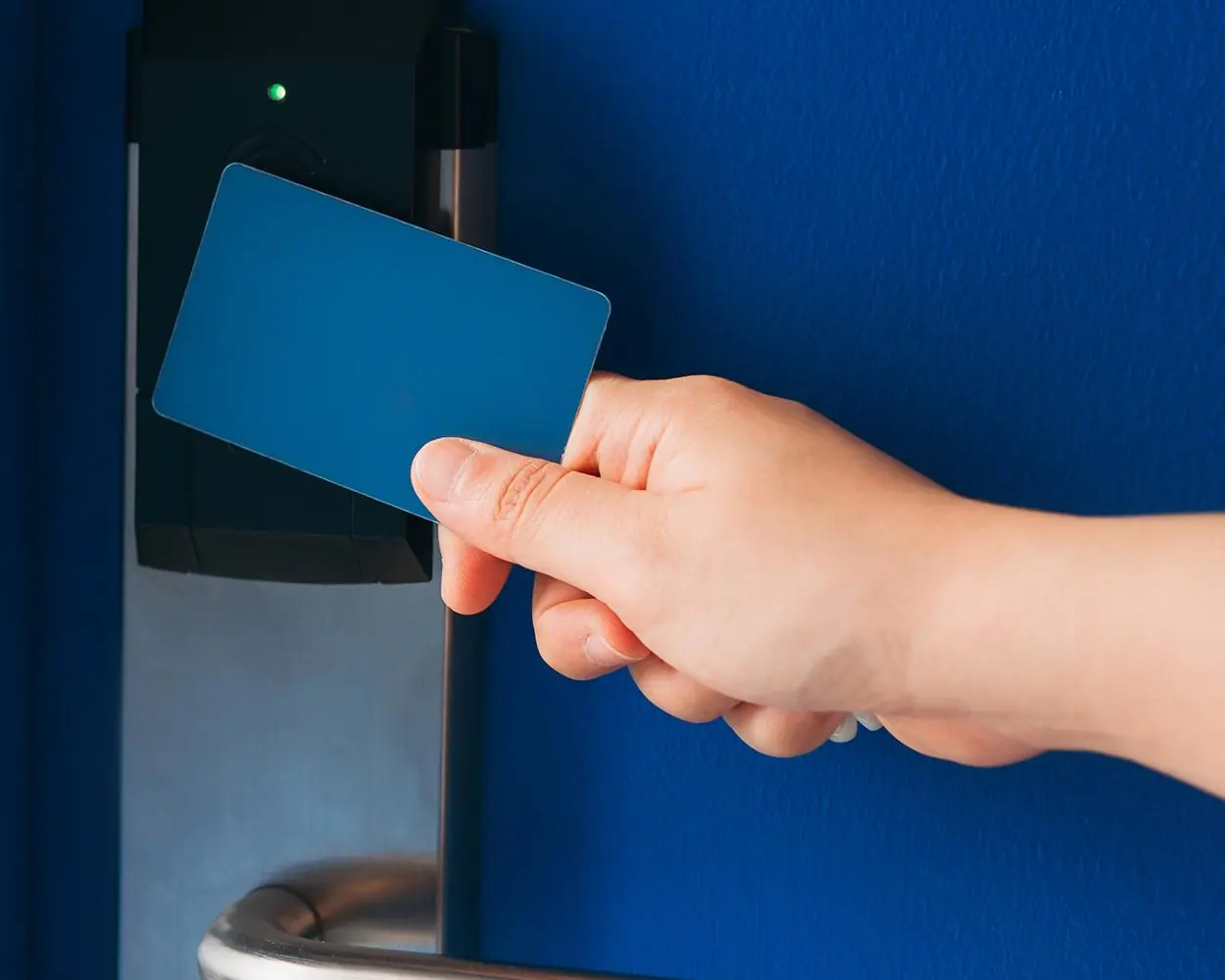
Check reception, deliveries and visitor movement
Confirm that visitors know where to report and that reception staff can request assistance when necessary. Review the process for identifying hosts, recording visits and ending access. Keep personal information proportionate and avoid leaving visitor records visible to unrelated callers.
Observe what happens during busy periods or when reception is unattended. A sign directing visitors to wait does little if the route into working areas remains unrestricted. Agree a practical arrangement that preserves accessibility and does not rely on staff confronting unknown people alone.
Review deliveries, couriers and collections separately. Identify a suitable handover point and decide which routes delivery personnel may use. Boxes left in circulation routes can create both security and safety problems, so include receiving procedures and prompt movement to appropriate storage.
Check staff permissions and changes in employment
Review who can enter the building and which internal areas they can reach. Permissions should reflect current responsibilities, not every role a person has ever held. Use individual credentials where appropriate so lost items and leavers can be dealt with without unnecessary disruption.
Connect the access process to starters, role changes and departures. Establish who requests changes, who authorises them and who confirms completion. Include temporary workers and long term contractors, whose end dates can otherwise be overlooked when access is managed outside normal HR processes.
Ask staff how exceptions are handled. Forgotten cards, shared passes and doors held open for unknown people can undermine formal rules. Provide a usable alternative for legitimate problems so employees are not encouraged to bypass controls simply to get through the day.
Check sensitive rooms and shared office spaces
Identify rooms requiring additional control, such as communications cupboards, records storage and areas containing confidential material. Confirm that access is restricted for a genuine purpose and that keys or electronic permissions are held by appropriate people. Include cleaners and maintenance personnel in the review.
Inspect meeting rooms used by visitors and shared working areas. Sensitive papers, unattended screens and accessible storage can expose information without any forced entry. Coordinate physical measures with clear desk practices and IT controls rather than treating the door as the only security boundary.
Check shared corridors, stairwells and service areas with the landlord or managing agent. Record how faults are reported and who can authorise changes. Your organisation should understand dependencies on communal access systems rather than assuming a problem outside its demise belongs to someone else.
Check closing routines and out-of-hours attendance
Walk through the actual closing sequence, including windows, secondary doors and any areas occupied late. Identify who verifies that visitors have left and who sets the alarm. Avoid vague arrangements where everyone assumes another team has checked the final floor.
Account for cleaners, hybrid working and occasional evening meetings. Access schedules and alarm setting need to accommodate authorised attendance without leaving the office unnecessarily exposed. Document a safe process for unexpected late arrivals rather than issuing broad permanent access to solve isolated exceptions.
Review lone working and incident escalation. Staff should know how to report signs of intrusion and when not to enter. A security checklist should never create an expectation that the last person on site investigates an alarm or confronts someone in an isolated area.
Check safety interfaces, records and follow-up actions
Ensure security doors and procedures remain compatible with escape and fire safety arrangements. Have competent people review relevant interfaces and fault behaviour. Do not make ad hoc changes to door release arrangements because a security incident has created pressure for a quick response.
Record faults, lost credentials and significant access incidents in a controlled system. Use the information to identify repeated problems, while keeping personal data only for a justified period. Restrict access to detailed logs and avoid using them for unrelated monitoring without proper assessment.
Turn findings into an action list with owners and completion checks. Revisit the checklist after office moves, occupancy changes or alterations to reception cover. A short review repeated consistently is more useful than a detailed document that no one updates when working practices change.
FAQs
Office building security checklist: frequently asked questions
Should every internal office door have access control?
Not automatically. Apply controls according to the purpose and risk of the space, while considering usability and escape requirements. Unnecessary restrictions can complicate movement without providing a meaningful security benefit.
How should we handle a lost access card?
Provide a clear reporting route, revoke the missing credential promptly and issue a replacement through an authorised process. Review relevant events where justified, and remind staff not to borrow another person's card.
Who owns this checklist in a shared building?
Your business should name an internal coordinator and agree boundaries with the landlord or managing agent. Allocate each action explicitly so communal entrances, internal rooms and tenant procedures are all covered.
Further reading
Related commercial security guides
Choosing access control
Choose around your doors, users and daily administration, with practical guidance on credentials, fire safety, integration and growth.
Read the guideMulti-tenant access control
A shared entrance needs one coherent set of rules, even when the businesses behind it operate differently. Separate building permissions from each tenant’s internal access decisions.
Read the guideBusiness security risk assessment
A security risk assessment turns concerns about crime into documented decisions. Identify what matters, how harm could occur and which practical measures reduce the most significant exposure.
Read the guide
Sources
External references used for this guide
Make office access work with your daily routines
Arrange a free site inspection and consultation to review entrances, staff permissions and the practical access control requirements of your office building.
Free site inspection
Discuss security for your office
Tell us about reception cover, shared areas, out-of-hours working and the rooms requiring additional protection so the review reflects how your team uses the building.
Or email info@msmesecurity.co.uk
- Monday to Friday: 9am to 6pm
- Saturday and Sunday: 11am to 5pm